

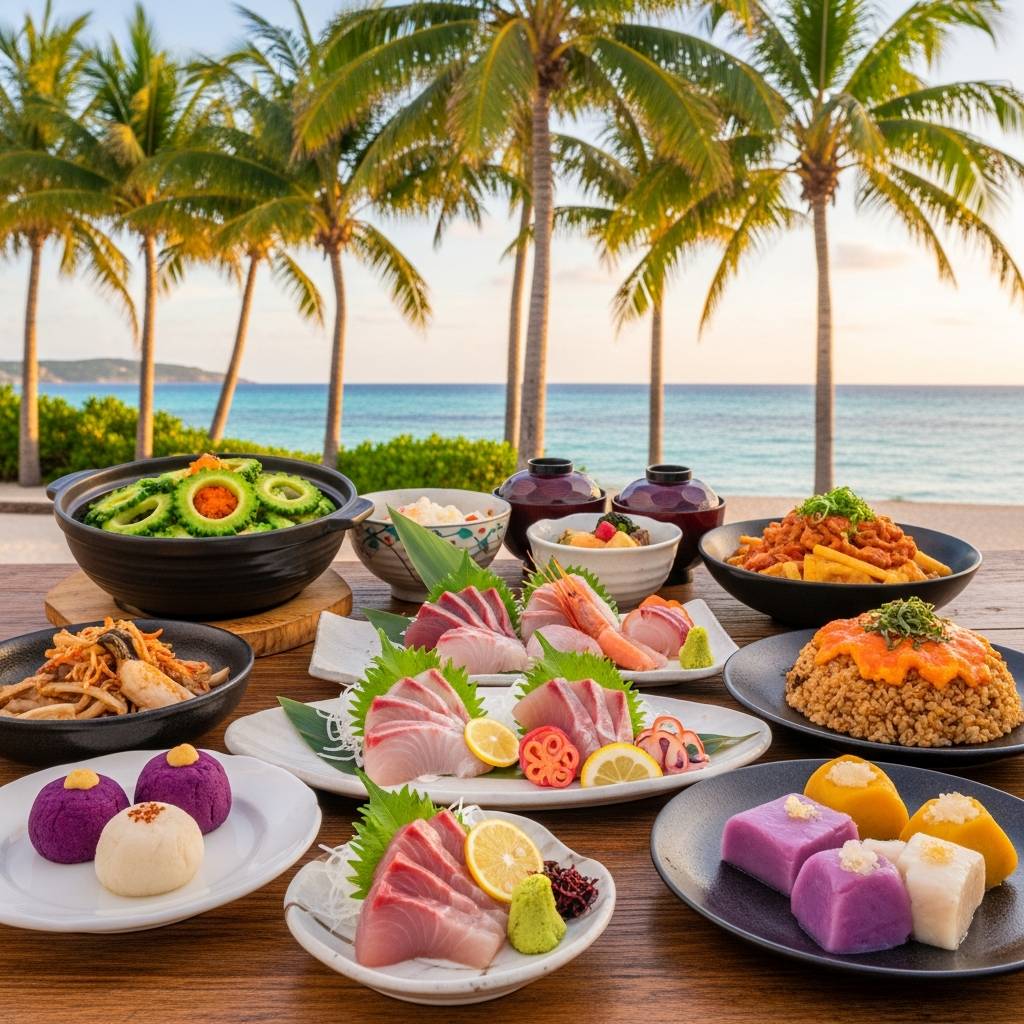
Discovering the vibrant flavors of Okinawa is like unlocking a secret chapter in Japan’s culinary story. While Tokyo and Kyoto might dominate the mainstream Japanese food conversation, Okinawa’s unique island cuisine offers something entirely different – a fascinating blend of traditional Japanese techniques with Chinese, Southeast Asian, and American influences. Having spent considerable time exploring this tropical paradise, I’ve assembled this comprehensive guide to help food enthusiasts navigate Okinawa’s distinctive culinary landscape. Whether you’re planning your first visit or simply curious about this region’s exceptional food heritage, this article will take you beyond typical Japanese fare into a world where longevity-boosting superfoods meet comfort dishes that tell the story of Okinawa’s complex history. From hidden local eateries serving authentic Okinawan specialties to the essential dishes that define this cuisine, prepare for a mouthwatering journey through Japan’s southernmost prefecture – where food isn’t just sustenance but a celebration of culture, history, and the island’s unique identity.
1. Top 10 Must-Try Dishes in Okinawa: A Culinary Journey Through Japan’s Tropical Paradise
Okinawa, Japan’s southernmost prefecture, boasts a culinary tradition as vibrant and distinctive as its turquoise waters. With influences from Japan, China, and Southeast Asia, Okinawan cuisine stands apart from mainland Japanese fare, offering unique flavors that tell the story of this tropical paradise’s complex history. Here are the top 10 must-try dishes that define Okinawa’s extraordinary food culture:
1. Goya Champuru**
This iconic stir-fry combines bitter melon (goya) with tofu, eggs, and often spam or pork. The dish epitomizes Okinawan cuisine’s fusion character, with the spam influence dating back to American military presence. Rich in nutrients, goya champuru represents the healthy eating habits that contribute to Okinawa’s famous longevity.
2. Rafute**
These melt-in-your-mouth pork belly slices are simmered for hours in awamori (Okinawan rice liquor), soy sauce, and brown sugar until tender. A testament to Okinawa’s “whole pig” culinary philosophy, rafute was once reserved for royalty but is now available at traditional restaurants throughout the islands.
3. Okinawa Soba**
Unlike buckwheat-based mainland soba, Okinawan soba features thick wheat noodles in a clear, savory pork broth topped with slow-cooked pork belly, fish cake, and green onions. Each restaurant offers its unique variation, making this comfort food an essential part of the Okinawan culinary journey.
4. Umibudo (Sea Grapes)**
Often called “green caviar,” these crunchy seaweed clusters pop delightfully in your mouth, releasing a burst of ocean flavor. Typically served with ponzu sauce, umibudo appears as a side dish or garnish at seafood restaurants along Okinawa’s coastline.
5. Sata Andagi**
These deep-fried Okinawan donuts offer a dense, cake-like texture with a crispy exterior. Traditional preparations may include black sugar (kokuto) for distinctive flavor. Find them at local markets, festivals, and specialty shops—perfect for enjoying while exploring Naha’s Kokusai Street.
6. Taco Rice**
A perfect example of cultural fusion, this dish combines American taco fillings atop Japanese rice. Created near American military bases, taco rice has evolved into an Okinawan specialty, with versions ranging from simple home-style preparations to gourmet interpretations.
7. Jimami Tofu**
This unique peanut-based tofu offers a creamy texture and subtle nutty flavor entirely different from traditional soy tofu. Often served as a dessert with brown sugar syrup, jimami tofu represents Okinawa’s distinctive approach to familiar ingredients.
8. Mozuku**
This delicate seaweed, served in a vinegar sauce, provides a refreshing taste experience while delivering numerous health benefits. Okinawa produces most of Japan’s mozuku, making it an authentic local specialty available at seafood restaurants and markets throughout the islands.
9. Ishigaki Beef**
From Ishigaki Island comes this premium beef, rivaling the more famous Kobe and Wagyu varieties. The cattle graze on natural grasses under tropical conditions, resulting in beautifully marbled, flavorful meat. Specialty restaurants in Ishigaki City offer teppanyaki and barbecue experiences featuring this local delicacy.
10. Shikuwasa Juice**
This citrus fruit, sometimes called “flat lemon,” produces a refreshing, vitamin C-rich juice found throughout Okinawa. Whether enjoyed straight, in cocktails with awamori, or flavoring local desserts, shikuwasa provides the perfect tropical refreshment after a day of island exploration.
Each dish tells a story of Okinawa’s unique cultural heritage, from its ancient Ryukyu Kingdom roots to modern international influences. For the authentic experience, visit local establishments where these dishes have been perfected over generations, connecting you to the heart of Okinawan culture through its extraordinary cuisine.
2. Okinawa’s Secret Food Spots: Where Locals Eat and What You Absolutely Need to Try
Beyond the tourist traps and crowded markets lies the authentic heartbeat of Okinawan cuisine. Local residents know that the most memorable meals are often found in humble establishments tucked away in residential neighborhoods and small alleyways. These hidden gems preserve traditional cooking methods and authentic flavors that have sustained generations.
In Naha’s Makishi area, venture beyond the famous public market to discover Yutaka-ya, a family-run izakaya where Okinawan classics are served alongside locally distilled awamori. Their rafute (braised pork belly) simmers for hours in a secret blend of soy sauce, brown sugar, and awamori until it practically dissolves on your tongue.
For seafood enthusiasts, Umichika in Onna Village remains relatively unknown to tourists despite serving what many locals consider the island’s freshest sashimi. Their daily catches – particularly the goya (bitter melon) stuffed with miso-marinated fish – exemplify the perfect harmony between land and sea that defines Okinawan cuisine.
In Motobu Peninsula, seek out Emi no Mise, where an elderly couple serves handmade soba noodles using techniques passed down through five generations. Their Okinawa soba features noodles with a distinctive texture, swimming in a pork-bone broth that’s been simmered for twelve hours.
No culinary exploration is complete without tasting chanpuru – Okinawa’s iconic stir-fry dishes that symbolize the island’s multicultural heritage. For the most authentic version, locals recommend Shima Kitchen in Yomitan, where the goya chanpuru combines bitter melon, tofu, egg, and spam in a dish that perfectly balances contrasting flavors.
The coastal village of Kin offers another must-visit spot: Yakuzen Shokudo, where traditional medicinal cooking incorporates superfoods like turmeric, mozuku seaweed, and shikuwasa citrus. Their longevity set meal features multiple small dishes designed to nourish both body and soul.
Perhaps Okinawa’s most important culinary experience involves the island’s unique approach to desserts. At Uchina Sweets in Uruma City, traditional Okinawan confections showcase native ingredients like black sugar, purple sweet potato, and local fruits. Their signature beni-imo (purple sweet potato) tart has developed a cult following among locals.
For those seeking immersive food experiences, timing your visit around local festivals provides unprecedented access to seasonal specialties. The Naha Tug-of-War Festival in October features temporary food stalls serving rare delicacies, while the Eisa drum festivals throughout summer showcase traditional foods prepared only for special occasions.
Remember that in Okinawa, food is more than sustenance—it’s medicine, community, and living history. The island’s cuisine tells stories of resilience, adaptation, and the pursuit of well-being that has helped make Okinawans among the longest-living people on earth. By seeking out these local establishments, you’ll not only satisfy your appetite but also connect with centuries of culinary wisdom that continues to thrive in Japan’s tropical paradise.
3. Beyond Sushi: How Okinawa’s Unique Cuisine Reveals Japan’s Hidden Food Culture
While mainland Japan is globally renowned for sushi, tempura, and ramen, Okinawa stands apart with its distinct culinary identity that many visitors find surprising. This southernmost prefecture of Japan tells a different gastronomic story—one shaped by its geographical isolation, tropical climate, and complex historical influences including Chinese, Southeast Asian, and American elements.
Okinawan cuisine (known locally as “Ryukyu cuisine”) reveals a side of Japanese food culture that challenges the common perceptions of what constitutes “Japanese food.” The region’s signature dishes incorporate ingredients rarely seen in Tokyo or Kyoto restaurants, with purple sweet potatoes, bitter melons (goya), and pork featuring prominently across the menu.
Perhaps most striking is Okinawa’s relationship with pork—often referred to as “the other white meat” in local parlance. Unlike the more restrained use of meat in traditional mainland Japanese cooking, Okinawans embrace pork in all its forms. Rafute (pork belly simmered in awamori and brown sugar) exemplifies this love affair, with its melt-in-your-mouth texture that contrasts sharply with the more delicate protein preparations found elsewhere in Japan.
Longevity-promoting foods play a central role in Okinawan cuisine. The island is home to some of the world’s longest-living people, and their diet reflects this reality. Goya champuru—a stir-fry of bitter melon with tofu, eggs, and often pork—might be an acquired taste for visitors, but its nutritional profile aligns perfectly with the Okinawan approach to food as medicine.
Equally fascinating is Okinawa’s unique approach to seaweed and marine vegetables. While mainland Japan certainly incorporates these ingredients, Okinawa elevates varieties like umibudo (sea grapes) to star status. These small, bubble-like seaweed clusters that pop pleasantly in the mouth are often served simply with ponzu dipping sauce.
The Okinawan pantry also features distinct staples that reflect centuries of cross-cultural exchange. Awamori, the indigenous distilled spirit made from long-grain rice, predates sake production in mainland Japan and shows clear Thai and Southeast Asian influences. Similarly, the widespread use of tūgarashi (island pepper) and other bold spices stands in contrast to the more subtle seasoning philosophy prevalent throughout most of Japan.
For travelers seeking to understand Japan’s full culinary spectrum, Okinawa serves as the perfect counterpoint to experiences in Tokyo, Osaka, or Kyoto. Its food culture demonstrates how Japan’s regional cuisines developed as distinct traditions rather than variations on a single theme. By exploring Okinawan food beyond the obligatory tourist experiences, visitors gain insight into how geography, history, and culture shape cuisine in ways that simple national boundaries cannot explain.
沖縄のレンタカー予約は「レンタカー広場」
レンタカー広場で最高の旅の思い出を!
レンタカーの予約はこちらから↓
・沖縄の格安レンタカーが最安値「1,500円~」予約・比較はレンタカー広場がおすすめ
https://rentacar-hiroba.com/