

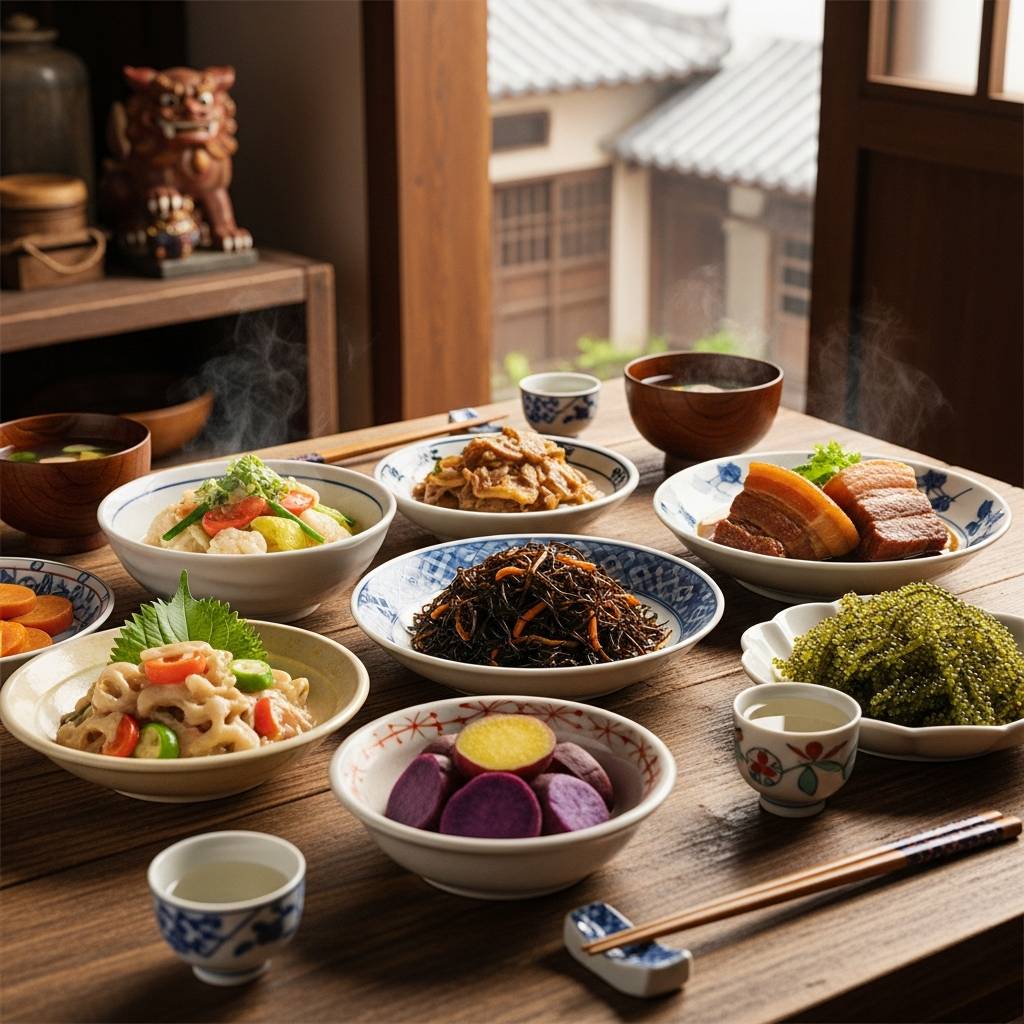
Have you ever wondered why Okinawans are known for their extraordinary longevity? The answer may lie in their traditional cuisine – a treasure trove of unique flavors and nutritional wisdom that has remained largely hidden from the global culinary spotlight. While mainland Japanese cuisine has conquered restaurant scenes worldwide, Okinawan traditional dishes continue to be a delightful secret waiting to be discovered.
As someone who has spent years exploring the culinary landscapes of Japan, I’m thrilled to take you on a journey through Okinawa’s forgotten flavors. This island paradise, with its distinct cultural heritage and subtropical climate, has developed cooking traditions that stand apart from what most people recognize as “Japanese food.” From nutrient-dense sea vegetables to unique preparation methods passed down through generations, Okinawan cuisine tells a story of resilience, resourcefulness, and remarkable health benefits.
In this article, we’ll dive deep into ancient recipes that deserve recognition, explore the connection between Okinawan food and the remarkable longevity of its people, and examine how these island specialties differ from their mainland counterparts. Whether you’re a culinary adventurer, health enthusiast, or simply curious about diverse food cultures, this exploration of Okinawan traditional meals promises to expand your understanding of authentic Japanese cuisine beyond sushi and ramen.
Join me as we uncover these culinary treasures that have sustained generations of islanders and might just hold secrets beneficial to us all.
1. The Hidden Gems of Okinawan Cuisine: Ancient Recipes Worth Exploring
Okinawan cuisine stands as a testament to the region’s unique history and cultural heritage, offering a treasure trove of flavors that differ significantly from mainland Japanese cooking. While many visitors to Japan focus on sushi, ramen, and tempura, Okinawa’s traditional dishes remain somewhat hidden from the global culinary spotlight, despite their exceptional taste profiles and remarkable health benefits.
The island’s geographical isolation has preserved cooking techniques and ingredients that date back centuries. Okinawan food draws influence from Chinese, Southeast Asian, and Japanese traditions, creating a distinctive fusion cuisine long before fusion became fashionable. This cultural melting pot has produced dishes that are not only delicious but have contributed to Okinawa’s reputation as one of the world’s “Blue Zones” – regions where people regularly live past 100 years.
Among the most notable Okinawan specialties is Goya Champuru, a stir-fry dish featuring bitter melon, tofu, eggs, and pork. The bitter melon’s distinct flavor represents the essence of Okinawan cooking – bold, unapologetic, and nutritionally dense. Another standout is Rafute, a melt-in-your-mouth braised pork belly simmered in awamori (Okinawan rice liquor), brown sugar, and soy sauce until the fat renders into a buttery texture.
Perhaps most intriguing are the lesser-known dishes like Tofuyo, often called “Okinawan cheese.” This fermented tofu delicacy dates back to the Ryukyu Kingdom era and was once reserved exclusively for royalty. Its complex umami flavor profile and creamy texture make it a revelation for those fortunate enough to discover it.
For those seeking authentic culinary experiences, visiting local establishments such as Yuntaku Tavern in Naha or Emi no Mise in Ogimi Village offers immersion into traditional Okinawan dining culture. These establishments maintain ancient recipes while educating visitors about the cultural significance behind each dish.
The true magic of Okinawan cuisine lies not just in its flavors but in its philosophy. “Nuchi gusui” – the belief that food is medicine – permeates every aspect of traditional cooking. Ingredients like mozuku seaweed, goya bitter melon, and shikuwasa citrus aren’t merely foods but tools for longevity and wellness, consumed daily as part of a balanced lifestyle rather than as occasional health supplements.
By exploring these ancient recipes and cooking methods, we don’t simply taste delicious food – we connect with centuries of wisdom about sustenance, health, and the profound relationship between what we eat and how we live.
2. Why Okinawan Traditional Diet Might Be the Secret to Longevity
The Okinawan islands have gained worldwide attention for having some of the highest concentrations of centenarians on the planet. What’s their secret? Many researchers point to their traditional diet as a key factor in their remarkable longevity. The classic Okinawan diet is distinctly different from mainstream Japanese cuisine and offers powerful insights into sustainable healthy eating.
Central to the Okinawan approach is the concept of “hara hachi bu” – eating until you’re 80% full. This natural portion control has helped Okinawans maintain healthy body weights for generations. Their traditional diet is plant-based, with sweet potatoes serving as the staple rather than rice. These purple sweet potatoes provide complex carbohydrates, fiber, and antioxidants that support heart health and regulate blood sugar.
Another cornerstone of Okinawan longevity is their consumption of sea vegetables. Kombu, mozuku, and other mineral-rich seaweeds feature prominently in soups and side dishes, delivering iodine, calcium, and iron in highly bioavailable forms. The traditional diet also incorporates bitter melon (goya), which contains compounds that may help regulate glucose metabolism and provide anti-inflammatory benefits.
Unlike Western diets, traditional Okinawan eating patterns feature minimal dairy and limited meat. When animal protein appears, it’s typically pork – but used sparingly as a flavoring rather than a centerpiece. This approach naturally limits saturated fat while providing high-quality protein. The diet also includes a diverse array of fermented foods like awamori (rice spirit) and fermented soybean dishes that support gut health.
Research from the Okinawa Centenarian Study suggests this nutritional pattern creates a perfect storm of benefits: low caloric intake combined with high nutrient density. The diet is naturally rich in antioxidants, has an optimal ratio of omega-3 to omega-6 fatty acids, and provides abundant phytonutrients. Together, these elements create a powerful anti-inflammatory effect that may help prevent age-related diseases.
While modernization has brought dietary changes to Okinawa, with younger generations embracing more Western eating patterns, the traditional approach remains a blueprint for longevity. By incorporating even some elements of this time-tested diet – emphasizing sweet potatoes, bitter greens, sea vegetables, and moderate portions – we might all tap into the remarkable health benefits that have sustained Okinawans for centuries.
3. From Sea to Table: How Authentic Okinawan Dishes Differ from Mainland Japanese Cuisine
While mainland Japanese cuisine often emphasizes seasonality, delicate flavors, and meticulous presentation, Okinawan food tells a different culinary story altogether. This southernmost prefecture’s distinct food culture reflects its unique geography, history, and cultural influences that set it apart from what many consider “traditional” Japanese cuisine.
The most striking difference lies in Okinawa’s protein sources. While mainland Japan reveres salmon, tuna, and freshwater fish, Okinawan cuisine celebrates the vibrant coral reef ecosystem surrounding the islands. Local specialties like goya champuru often incorporate rafute (braised pork belly), showcasing Okinawans’ historical preference for pork—a stark contrast to mainland Japan’s historical Buddhist-influenced dietary restrictions.
Ocean-to-table dining in Okinawa means something entirely different from Tokyo or Kyoto. Umibudo (sea grapes), mozuku seaweed, and asa (sea lettuce) feature prominently in Okinawan dishes, offering textures and mineral-rich flavors rarely experienced in mainland cooking. The islands’ tropical waters yield distinctly different seafood varieties, with gurukun (banana fish) and shima-aji (striped jack) replacing the salmon and mackerel common elsewhere in Japan.
Another fundamental difference is Okinawa’s heavy reliance on vegetables as healing foods. The concept of “nuchi gusui” (medicine of life) permeates Okinawan cooking, with indigenous vegetables like goya (bitter melon) and handama (Okinawan spinach) considered both food and medicine. This holistic approach predates modern nutritional science and differs from mainland Japan’s more aesthetic approach to vegetable preparation.
Perhaps most notably, Okinawan cuisine incorporates significant Chinese and Southeast Asian influences due to its historical trade relationships. Dishes like Okinawa soba feature thick wheat noodles in pork broth—completely different from the buckwheat soba of mainland Japan. The liberal use of awamori (Okinawan rice liquor) in cooking also distinguishes island cuisine from sake-infused mainland dishes.
Seasoning philosophies diverge dramatically as well. While mainland Japanese cooking often relies on subtle dashi, soy sauce, and mirin combinations, Okinawan cuisine boldly incorporates ingredients like turmeric, brown sugar, and koregusu (chili-infused awamori)—creating flavor profiles that would seem almost foreign at a traditional Kyoto dining table.
Understanding these differences not only enhances appreciation for Okinawa’s culinary heritage but reveals how Japan’s regional cuisines developed in distinct environmental and cultural contexts. While mainland Japanese cuisine prioritized refinement and visual beauty, Okinawan food evolved with longevity, practicality, and pure nourishment as its guiding principles.
沖縄のレンタカー予約は「レンタカー広場」
レンタカー広場で最高の旅の思い出を!
レンタカーの予約はこちらから↓
・沖縄の格安レンタカーが最安値「1,500円~」予約・比較はレンタカー広場がおすすめ
https://rentacar-hiroba.com/