

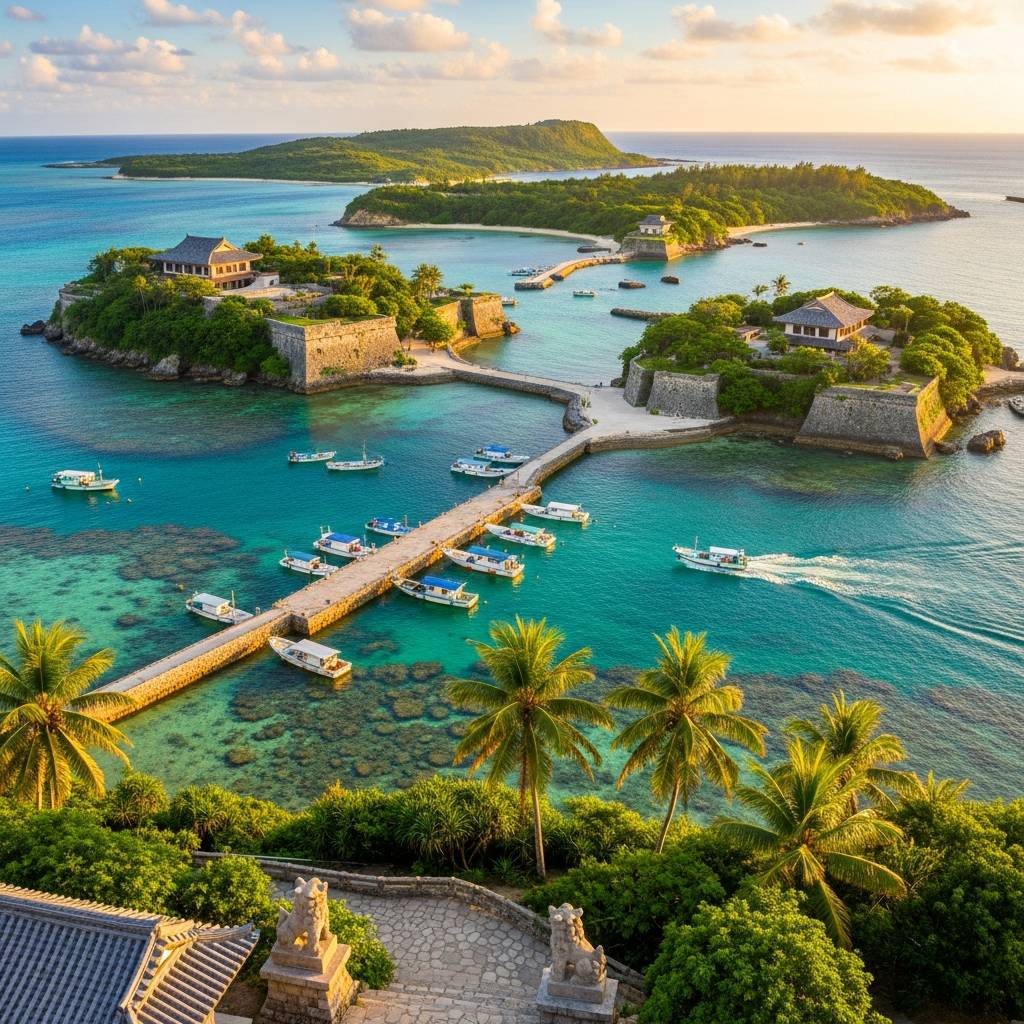
Discover the hidden treasures of Japan’s southernmost prefecture as we embark on an extraordinary journey through Okinawa’s UNESCO-recognized islands. While many travelers limit their experience to the main island, a world of cultural richness and natural beauty awaits those willing to venture beyond the familiar. From ancient sacred sites that tell stories of a bygone kingdom to pristine beaches with crystal-clear waters that rival any tropical paradise, Okinawa’s island chain offers experiences that remain wonderfully unspoiled by mass tourism.
In this comprehensive guide, I’ll share insider knowledge on accessing those lesser-known islands that even seasoned Japan travelers often overlook, navigate the intricate ferry systems like a local, and provide a perfectly balanced 7-day itinerary that maximizes your World Heritage experience without feeling rushed. Whether you’re a history enthusiast, nature lover, or simply seeking authentic cultural immersion, this Okinawan island-hopping adventure promises memories that will last a lifetime.
1. 5 Secret Islands in Okinawa That UNESCO Recognized but Tourists Often Miss
While Okinawa’s main island draws millions of visitors, the true treasures of this Japanese archipelago lie in its lesser-known UNESCO-recognized islands. These hidden gems offer pristine beaches, unique ecosystems, and cultural experiences that most tourists never discover.
First on the list is Iriomote Island, home to the critically endangered Iriomote wildcat. This island boasts Japan’s largest mangrove forest and the stunning Pinaisara Falls. Despite its UNESCO Biosphere Reserve status, only a fraction of Okinawa’s visitors make the journey here, leaving its kayaking routes through jungle rivers blissfully uncrowded.
Taketomi Island presents a time capsule of traditional Ryukyu culture. Walk or cycle through streets lined with traditional houses with red-tiled roofs and coral walls, protected by UNESCO for their cultural significance. The star-shaped sand at Kaiji Beach, formed from the exoskeletons of microscopic organisms, makes for a magical souvenir that few tourists even know about.
Ishigaki Island serves as a gateway to the surrounding islands but deserves exploration itself. Its blue coral reef, one of the world’s largest, forms part of the UNESCO-recognized ecosystem. The Kabira Bay’s emerald waters offer glass-bottom boat tours that reveal an underwater paradise without the crowds of more famous diving destinations.
Kuroshima, known as “Cow Island,” features sprawling pastures alongside some of Japan’s most beautiful beaches. This flat coral island has been recognized by UNESCO for sustainable coexistence between humans and nature. Despite its easy accessibility from Ishigaki, most visitors skip this idyllic spot.
Finally, Kohama Island offers panoramic views from its highest point, Ufu-dake. This UNESCO-acknowledged landscape provides the perfect backdrop for understanding the geological formation of the entire Yaeyama Island group. The island’s traditional sugar production methods have also gained recognition for preserving cultural heritage.
These five islands represent just a fraction of Okinawa’s UNESCO World Heritage potential. By venturing beyond the typical tourist path, visitors can experience authentic Ryukyu culture, untouched natural environments, and contribute to sustainable tourism practices that help preserve these remarkable islands for future generations.
2. The Ultimate Guide to Exploring Okinawa’s Sacred World Heritage Sites by Ferry
Navigating between Okinawa’s UNESCO World Heritage gems offers travelers a unique perspective that few tourists experience. The island’s sacred sites, collectively known as “Gusuku Sites and Related Properties of the Kingdom of Ryukyu,” are spectacularly preserved remnants of a once-flourishing independent kingdom. While many visitors limit themselves to land-based explorations, the ferry network provides an authentic and scenic alternative.
The most efficient ferry route begins at Tomari Port in Naha, where regular services connect to Tokashiki and the outer islands. For history enthusiasts, timing your visit to Shuri Castle during early morning hours (before 9 AM) helps avoid both crowds and the midday heat. The castle’s distinctive red architecture and stone walls tell the story of Okinawa’s royal past in vivid detail.
Ferry access to Seifa-utaki, Okinawa’s most sacred natural site, requires traveling to the Kudaka Island ferry terminal in Nanjo City. The pristine sacred grove has served as a spiritual center for centuries, with its limestone formations creating natural “gates” that frame the ocean view perfectly for photographs. Local regulations request visitors maintain respectful silence in certain areas – these quiet moments often become travelers’ most profound memories.
For those with limited time, the “Heritage Pass” available at Tomari Port offers discounted combined tickets for ferry transportation and site admissions. Experienced travelers recommend scheduling at least three days for a comprehensive tour of all major heritage locations, with Nakijin Castle ruins and Zakimi Castle being particularly impressive during the spring when cherry blossoms frame their ancient stonework.
Pack light but prepare for variable weather conditions – the ferries operate year-round, but services may be adjusted during typhoon season. Most heritage sites have implemented multilingual audio guides that can be downloaded via QR codes at each location, eliminating language barriers.
The local ferry companies often feature special sunset cruises that provide dramatic views of these heritage sites from the water – a photographer’s dream for capturing the golden light on ancient stone structures. Remember that Okinawa’s heritage sites close earlier than their mainland counterparts, typically by 5:30 PM, so planning morning departures maximizes your exploration time.
3. How to Plan the Perfect 7-Day Island-Hopping Itinerary Through Okinawa’s World Heritage Gems
Planning a comprehensive island-hopping itinerary through Okinawa requires strategic thinking to maximize your time at each World Heritage site. This 7-day route balances cultural immersion with natural wonders while allowing sufficient time to appreciate the unique character of each island.
Day 1-2: Naha and Southern Okinawa Main Island**
Begin your journey in Naha, where Shuri Castle should be your first priority. Spend a full morning exploring this UNESCO site with its vermilion architecture and royal heritage. In the afternoon, visit the adjacent gardens and the Shikinaen Royal Garden. The following day, explore the Gusuku Sites, including Nakagusuku Castle ruins, allowing approximately 3 hours for a thorough visit. Reserve your evening for Kokusai Street’s local cuisine.
Day 3: Kume Island (Kumejima)**
Catch an early 40-minute ferry or 30-minute flight to Kumejima. The island’s pristine beaches and Tatami Ishi (unique geological formations) deserve at least 5 hours of exploration. Visit Hatenohama, a stunning sandbar accessible by boat tour, but book your tour at least 2 days in advance as spots fill quickly during peak seasons.
Day 4: Miyako Island**
Travel to Miyako Island via a 45-minute flight from Kumejima. Spend your day between Higashi-Hennazaki Cape and Yonaha Maehama Beach, consistently ranked among Japan’s most beautiful beaches. Allocate 4 hours for snorkeling at Yoshino reef, where visibility often exceeds 30 meters.
Day 5-6: Yaeyama Islands (Ishigaki and Iriomote)**
Fly to Ishigaki (50 minutes from Miyako) and use it as your base for exploring the Yaeyama archipelago. Dedicate your first afternoon to Kabira Bay’s glass-bottom boat tours. On day 6, take a day trip to Iriomote Island (a 40-minute ferry ride) to experience Japan’s largest mangrove forest. The Urauchi River cruise travels directly through a World Heritage-designated area and requires advance booking during high season.
Day 7: Zamami Island**
Return to Okinawa main island and take a high-speed ferry (70 minutes) to Zamami in the Kerama Islands. The pristine coral reefs here are part of Japan’s newest national park. Between January and March, Zamami offers some of Japan’s best whale-watching opportunities, with an 85% sighting success rate.
Practical Planning Tips:**
– Purchase the “Okinawa Island Pass” for discounted inter-island flights
– Book accommodations 3-4 months in advance for high season (March-May and October-November)
– Consider luggage-forwarding services between islands to travel light
– Download the bilingual “Okinawa Heritage Guide” app for offline navigation
– Reserve a portable WiFi device for consistent connectivity across islands
This itinerary allows for flexibility while ensuring you experience the full spectrum of Okinawa’s UNESCO World Heritage sites. The strategic sequencing minimizes travel time between destinations, with no single journey exceeding 70 minutes, maximizing your exploration time on each unique island.
沖縄のレンタカー予約は「レンタカー広場」
レンタカー広場で最高の旅の思い出を!
レンタカーの予約はこちらから↓
・沖縄の格安レンタカーが最安値「1,500円~」予約・比較はレンタカー広場がおすすめ
https://rentacar-hiroba.com/