

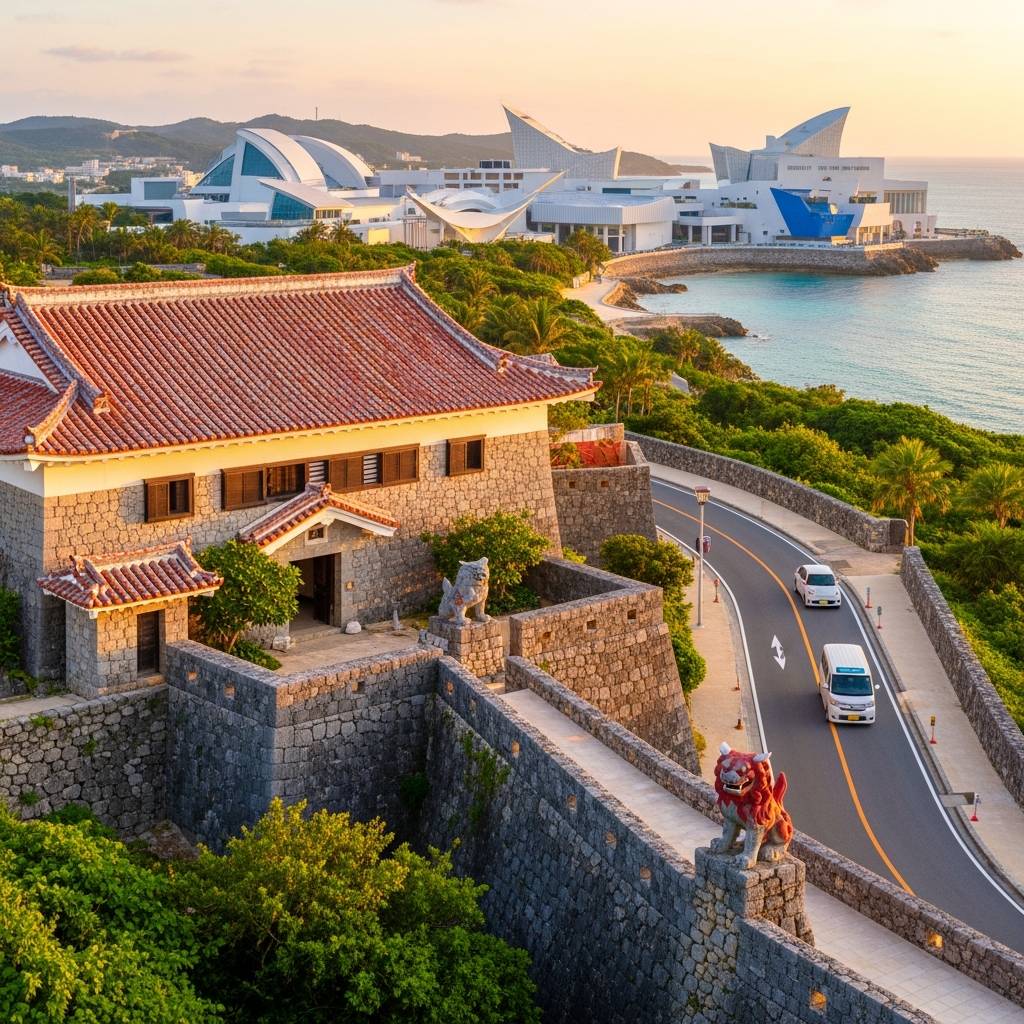
Discovering Okinawa’s rich historical tapestry requires more than just visiting the popular tourist destinations. Beyond the pristine beaches and resort areas lies a world of ancient castles, sacred sites, and cultural landmarks that tell the story of this unique Japanese prefecture. For travelers seeking an authentic connection with Okinawa’s heritage, exploring by car offers unparalleled freedom and access to hidden treasures that many visitors never experience.
Whether you’re fascinated by the ancient Ryukyu Kingdom’s magnificent castle ruins, intrigued by the island’s complex WWII history, or simply eager to discover cultural sites at your own pace, a self-driven heritage tour delivers experiences impossible to replicate through organized tours. This comprehensive guide will take you through Okinawa’s most significant historical landmarks while revealing lesser-known gems that showcase the island’s remarkable 500-year journey from an independent kingdom to its present-day cultural renaissance.
Join us as we navigate winding coastal roads, mountain passes, and rural villages to uncover the authentic heart of Okinawa’s heritage – experiences only possible with the flexibility and freedom that comes with exploring this fascinating island by car.
1. 10 Hidden Historical Gems in Okinawa Only Accessible by Car
Okinawa’s rich cultural tapestry extends far beyond its famous beaches and tourist hotspots. For history enthusiasts and cultural explorers, the true magic of this Japanese prefecture lies in its secluded historical sites—many of which remain undiscovered by mainstream tourism. Renting a car unlocks these hidden treasures, offering a journey through time that public transportation simply cannot provide.
Katsuren Castle Ruins sits majestically on a limestone ridge in Uruma City, offering panoramic views of the East China Sea. This UNESCO World Heritage site, once home to a 15th-century trading lord, requires a vehicle to access its remote location, rewarding visitors with fewer crowds and a more intimate historical experience.
The mysterious Yomitan Underground Naval Headquarters presents a sobering glimpse into Okinawa’s WWII history. Located down winding country roads, this extensive tunnel system served as the Japanese Navy’s final command center during the Battle of Okinawa. The site’s remote location makes it accessible almost exclusively to those with private transportation.
Venture to the northern Motobu Peninsula to discover Nakijin Castle, a sprawling stone fortress dating back to the 13th century. This lesser-known Ryukyu Kingdom stronghold features impressive stone walls that snake along the ridgeline. During spring, the surrounding cherry blossoms create a photographer’s paradise—a seasonal spectacle missed by those confined to bus routes.
The sacred Seifa Utaki, tucked away in Okinawa’s southeastern forests, served as the most important religious site for the Ryukyu Kingdom. This spiritual sanctuary requires navigating narrow roads to reach its entrance, but rewards visitors with an atmospheric journey through forest paths to ancient prayer sites.
On the Katsuyama Peninsula, Katsuran Temple Cave remains virtually unknown to mass tourism. This natural limestone cave houses ancient Buddhist carvings and was once used as a secret worship site. Its isolated location requires a vehicle and a short hike, ensuring an undisturbed cultural experience.
The Hiji Waterfall Trail in Kunigami offers both natural beauty and historical significance, with remnants of old mountain villages along the route. Driving allows visitors to reach this northern attraction and spend adequate time exploring the historical settlements that once thrived in these mountains.
In central Okinawa, the remains of Urasoe Castle provide a less crowded alternative to the famous Shuri Castle. This historic site features impressive stone walls and offers insights into the early Ryukyu Kingdom. Its location on a steep hill makes car access the practical choice for most visitors.
The Taketomi Island Stone Walls, while requiring a ferry crossing after parking your car, showcase traditional Ryukyuan village architecture. The island’s preserved layout offers an authentic glimpse into historical Okinawan community design that has remained largely unchanged for centuries.
Near Cape Hedo, the northernmost tip of Okinawa’s main island, the little-known Hantagawa Ancient Village Site preserves stone foundations from a settlement dating back over 500 years. This archaeological treasure requires driving along scenic coastal roads to reach its remote location.
Finally, the Tsuboya Pottery District in Naha represents living history, where traditional ceramic techniques have been practiced for centuries. While in the capital city, having a car allows visitors to transport delicate pottery purchases safely while exploring multiple historical sites in a single day.
These ten historical gems reveal Okinawa’s multilayered past, from ancient indigenous beliefs to the impacts of various occupying forces. By exploring these sites with a rental car, travelers gain not just convenience but the freedom to experience Okinawa’s heritage at their own pace, away from the constraints of tour schedules and public transportation limitations.
2. The Ultimate Road Trip Guide: Exploring 500 Years of Okinawa’s History in One Week
Planning a comprehensive road trip through Okinawa’s rich historical landscape requires strategic timing and routing. The island’s historical sites span centuries, from ancient Ryukyu Kingdom castles to sobering World War II memorials, all accessible with a well-planned itinerary.
Begin your journey in Naha, where renting a car at Naha Airport provides immediate mobility. International visitors need an International Driving Permit alongside their home country’s license. Select a compact vehicle for navigating narrow village roads while ensuring sufficient comfort for longer drives between heritage sites.
For the northern historical sites, allocate at least two full days. The UNESCO World Heritage Nakijin Castle ruins offer panoramic ocean views and insight into the island’s feudal past. Continue to the Okinawa Peace Memorial Park in Itoman, where contemplative spaces honor the devastating Battle of Okinawa. These contrasting sites illuminate the island’s journey from ancient kingdom to modern war zone.
Central Okinawa deserves equal attention, with Katsuren Castle’s dramatic hilltop ruins and Zakimi Castle’s defensive architecture highlighting different periods of Ryukyuan military design. The restored Nakamura House in Kitanakagusuku offers a glimpse into traditional Okinawan daily life from centuries past.
When visiting Shuri Castle, arrive early to avoid crowds. Though rebuilt after war damage, its vermilion halls remain powerful symbols of Ryukyuan sovereignty. Nearby, explore the underground former Japanese Navy headquarters, tunnels that silently testify to the island’s strategic military importance.
For authentic cultural immersion, time your visit to coincide with local festivals. The Shuri Castle Festival recreates royal processions, while village harvest celebrations feature traditional performing arts rarely seen elsewhere.
Practical considerations include avoiding Golden Week and Obon holiday periods when traffic congestion peaks. The spring months of April-May and fall months of October-November offer ideal driving conditions with minimal rainfall and comfortable temperatures.
This historically-focused itinerary connects dots across centuries, revealing how Okinawa’s unique position between East China Sea and Pacific Ocean shaped its identity through kingdom prosperity, imperial subjugation, devastating warfare, and cultural renaissance.
3. Why Driving Through Okinawa’s Heritage Sites Offers an Experience Cruise Ships Can’t Match
While cruise ships bring thousands of tourists to Okinawa’s shores each year, they offer only a glimpse of this culturally rich archipelago. Self-driving through Okinawa’s heritage sites provides an unparalleled experience that cruise ships simply cannot match. With a rental car, you gain the freedom to create your own itinerary, spending as much time as you wish at each historical treasure. Imagine watching the sunset from the stone walls of Nakagusuku Castle without rushing to meet a ship’s departure schedule, or discovering the hidden Katsuren Castle ruins at your own pace.
Beyond scheduling freedom, driving allows access to remote cultural sites like the sacred Sefa-utaki, tucked away in southern Okinawa, or the preserved Yomitan pottery village where traditional Ryukyuan ceramics continue to be crafted using centuries-old methods. Many of these authentic cultural experiences lie beyond the standard cruise excursion routes.
The road itself becomes part of the heritage experience. The Okinawa Expressway offers stunning coastal views unavailable from cruise ship decks, while rural roads through sugarcane fields and past small village shrines reveal everyday Okinawan life. Stop spontaneously when you spot a traditional shiisa lion guardian on a rooftop or when you smell the aroma of freshly made sata andagi (Okinawan donuts) from a roadside stand.
Driving also connects you with local communities. At the Nakijin Castle ruins, chat with local guides who share stories passed down through generations, or enjoy an impromptu conversation with an elder at a neighborhood market in Naha—encounters that package tours rarely facilitate. These authentic exchanges provide context that transforms stone ruins into living history.
The economic impact of your visit spreads more evenly throughout the island when you drive. Rather than tourist dollars concentrating around ports, your patronage at family-owned restaurants in Kin Town or traditional craft shops in Yomitan directly supports local cultural preservation efforts.
Perhaps most importantly, a self-driven heritage tour allows immersion in Okinawa’s unique pace—the unhurried island time that contrasts sharply with cruise schedules. This slower rhythm is essential to truly absorbing the heritage of a culture that values contemplation and connection with natural surroundings, from ancient sacred groves to pristine beaches where traditional fishing methods continue.
For photographers, history enthusiasts, and cultural explorers, the ability to wait for perfect lighting at Shuri Castle or return to a favorite site multiple times creates opportunities for deeper understanding and appreciation that scheduled tours simply cannot provide.
沖縄のレンタカー予約は「レンタカー広場」
レンタカー広場で最高の旅の思い出を!
レンタカーの予約はこちらから↓
・沖縄の格安レンタカーが最安値「1,500円~」予約・比較はレンタカー広場がおすすめ
https://rentacar-hiroba.com/