

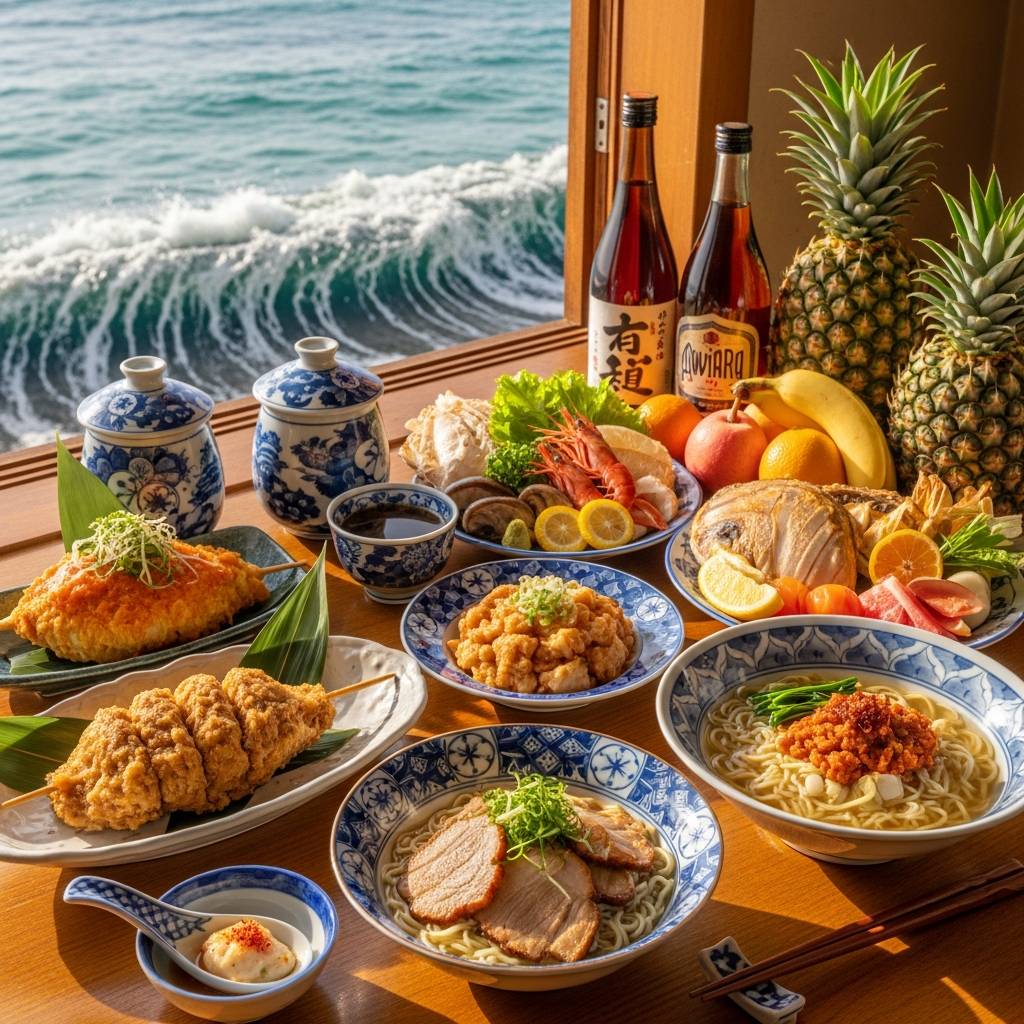
Are you planning a trip to Japan’s tropical paradise? Beyond Okinawa’s pristine beaches and crystal-clear waters lies a culinary landscape as diverse and captivating as its natural beauty. This sun-kissed archipelago boasts one of the world’s most fascinating food cultures – a unique fusion of Japanese traditions with Chinese, Southeast Asian, and American influences, shaped by centuries of maritime trade and complex history.
As a passionate food explorer who has traversed Okinawa’s culinary landscape extensively, I’m thrilled to share insider knowledge that will transform your dining experience from merely satisfactory to absolutely unforgettable. Whether you’re seeking hidden local eateries that tourists rarely discover, longevity-boosting traditional foods that contribute to Okinawa’s famous centenarian population, or the freshest seafood experiences that will redefine your standards forever, this comprehensive guide has you covered.
Prepare to embark on a gastronomic journey that goes beyond the usual tourist trail. The flavors, techniques, and dining customs of Okinawa tell a story that’s waiting for you to discover. Let your taste buds be your guide as we explore the extraordinary culinary treasures of Japan’s southernmost prefecture.
1. 10 Hidden Food Gems in Okinawa That Locals Don’t Want You to Know About
Okinawa’s culinary landscape is a treasure trove of flavors that extends far beyond the tourist-packed restaurants in Naha. While visitors flock to well-known establishments, true food enthusiasts understand that the most authentic experiences lie hidden in plain sight. These secret spots, cherished by locals, offer the genuine tastes of Okinawa that you won’t find in guidebooks.
In the backstreets of Makishi Market, Yunangi serves up traditional Okinawan pork dishes that have been perfected over three generations. Their rafute (braised pork belly) melts in your mouth with a perfect balance of sweet and savory that will haunt your food memories for years to come.
For seafood aficionados, Umichika in Itoman offers the freshest catch prepared with minimal intervention. Their sea grapes (umi-budo) and local fish sashimi showcase the pure flavors of Okinawa’s surrounding waters without unnecessary frills.
Hidden in Yomitan village, Cafe Garamanjyaku serves an unforgettable fusion of Okinawan and Western cuisine. Their goya (bitter melon) pasta combines local ingredients with Italian cooking techniques, creating a dish that represents Okinawa’s evolving food culture.
If you’re seeking authentic Okinawan soba, bypass the tourist traps and head to Kishimoto Shokudo in Motobu. This family-run establishment has been serving their secret-recipe broth for decades, with handmade noodles that have the perfect chew.
The unassuming Emi no Mise in Nago offers home-style Okinawan cooking that will transport you to a local grandmother’s kitchen. Their jimami tofu (peanut tofu) and champuru (stir-fried dishes) represent the soul of Okinawan home cooking.
For dessert enthusiasts, Okashi Goten’s lesser-known competitor, Chinsuko Honpo, creates artisanal versions of Okinawa’s famous shortbread that outshine the mass-produced varieties in taste and texture.
Tucked away in Uruma City, Ryukyu Dining Muchi Muchi specializes in ancient Ryukyuan royal cuisine. Their carefully researched and beautifully presented dishes offer a culinary history lesson you can eat.
The tiny six-seat counter at Izakaya Tamagusuku in Nanjo serves Okinawan tapas-style dishes paired with locally produced awamori. Their pork ears in peanut sauce and island tofu are transcendent when accompanied by the perfect spirit.
On Kouri Island, Cafe Restaurant Sea Garden offers not just stunning ocean views but also specializes in dishes made with sea grapes and mozuku seaweed harvested just meters from their doorstep.
Finally, no hidden gems list would be complete without mentioning Ufuya in Nago, housed in a 130-year-old traditional Okinawan home. Their multi-course experience showcases rare island ingredients and cooking methods that are quickly disappearing even among local households.
These establishments represent the true heart of Okinawan cuisine—where tradition meets innovation, where simplicity highlights extraordinary ingredients, and where the island’s complex cultural history is expressed through every bite.
2. Eating Like an Okinawan Centenarian: The Secret Foods Behind the World’s Longest Lifespan
Okinawa’s Blue Zone status isn’t accidental—it’s directly linked to the traditional diet that has helped islanders live well into their 100s with remarkable health. The Okinawan approach to eating offers valuable lessons for those seeking longevity through food choices.
At the heart of the centenarian diet is the “nuchi gusui” philosophy—believing that food is medicine. Okinawans traditionally consume a plant-based diet with over 30% of their intake coming from vegetables, particularly sweet potatoes (beni-imo), which have historically replaced rice as the staple carbohydrate. These purple powerhouses are rich in antioxidants and have a lower glycemic index than white rice or potatoes.
Goya (bitter melon) stands as another cornerstone of longevity cuisine. This knobby, bitter vegetable contains compounds that help regulate blood sugar and is prominently featured in “goya champuru,” a stir-fry combining tofu, eggs, and sometimes pork. Local restaurants like Yagi-san’s Champuru in Naha serve traditional versions that maintain authentic preparation methods.
Seaweed varieties including mozuku and kombu provide essential minerals and are consumed daily, often in soups or as side dishes. These sea vegetables deliver iodine, calcium, and iron while containing minimal calories.
What’s perhaps most notable is the Okinawan practice of “hara hachi bu”—eating until you’re 80% full. This natural portion control has been scientifically linked to reduced oxidative stress and enhanced cellular repair. Combined with their consumption of fermented foods like awamori (rice liquor) and fermented tofu, Okinawans maintain healthy gut microbiomes well into old age.
Protein sources in traditional diets come primarily from fish, soy products, and occasional pork—with every part of the pig utilized respectfully. At Emi no Mise in Ogimi Village, visitors can taste authentic Okinawan dishes prepared by local women who’ve maintained traditional cooking methods for generations.
The most remarkable aspect of the Okinawan diet isn’t just what’s included but the mindful approach to eating. Meals are social events, eaten slowly and with gratitude—practices that modern nutritionists now recognize as crucial for proper digestion and satisfaction.
For visitors seeking to experience these longevity-promoting foods, farmers’ markets like Makishi Public Market offer fresh local produce, while restaurants such as Garamanjyaku serve contemporary dishes honoring traditional ingredients and preparation methods.
By incorporating these Okinawan dietary principles—emphasizing plants, practicing moderation, consuming fermented foods, and approaching eating mindfully—we might not just satisfy our culinary curiosity but potentially extend our healthy years as well.
3. From Sea to Table: The Ultimate Guide to Okinawa’s Fresh Seafood Experiences
Okinawa’s identity is intrinsically linked to the azure waters that surround this tropical paradise. The island’s seafood culture represents not just sustenance, but a profound connection to the ocean that has shaped local traditions for centuries. For culinary adventurers, Okinawa’s seafood scene offers an unparalleled journey of fresh, diverse, and uniquely prepared marine treasures.
At Makishi Fish Market in Naha, the heartbeat of Okinawa’s seafood trade pulses vibrantly. Vendors display everything from vibrant coral reef fish to massive tiger prawns. The market’s second-floor restaurants offer the ultimate interactive dining experience – select your catch downstairs and have it prepared to your specifications minutes later. The sashimi here transcends ordinary raw fish experiences; the tuna melts on your tongue while sea grapes (umibudo) provide a delightful oceanic pop.
Mozuku seaweed, a slippery, thin seaweed variety unique to Okinawan waters, appears in countless dishes. Rich in fucoidan, a compound studied for potential health benefits, this marine vegetable exemplifies how Okinawan seafood connects to the island’s renowned longevity. Try it in a vinegared sunomono salad for a refreshing appetizer that cleanses the palate.
Lobster lovers should venture to Onna Village’s seaside restaurants, where spiny Okinawan lobsters are often grilled with nothing more than a squeeze of local shikuwasa citrus. The simplicity allows the natural sweetness of the meat to shine. For authentic experiences, Yanbaru Fishing Cooperative in the northern region offers seasonal catches prepared by fishermen’s families.
Ishigaki Island deserves special mention for its famed Yaeyama soba topped with island-caught skipjack tuna. Meanwhile, the turquoise waters around Miyako Island yield some of Japan’s most prized shellfish, including giant clams (takakagai) often served as carpaccio with just a hint of wasabi.
For the adventurous palate, sea snake (irabu) soup represents one of Okinawa’s most distinctive delicacies. Traditionally believed to possess medicinal properties, this clear broth dish is found in specialized restaurants throughout the main island.
Timing your visit with local fishing seasons enhances the experience. Winter brings premium quality tuna, while summer sees an abundance of colorful reef fish. The annual releasing of fishing restrictions on Okinawa’s delectable rock oysters creates a frenzy among local gourmands.
Sustainable seafood practices are gaining momentum across the prefecture. Restaurants like Cafe Garamanjaku in Onna incorporate locally farmed fish in their innovative dishes, supporting conservation while maintaining the highest culinary standards.
True Okinawan seafood appreciation goes beyond just eating. Consider joining a traditional fishing excursion with local fishermen who still practice ancient techniques like tidal pool fish trapping or night fishing with gas lanterns. These immersive experiences provide context to the island’s maritime heritage that has sustained generations.
Whether you’re sampling the daily catch at a humble seaside shack or enjoying premium seafood courses at luxury establishments like The Terrace restaurant at The Busena Terrace Beach Resort, Okinawa’s seafood culture offers something for every preference and budget. The journey from sea to table is remarkably short here – ensuring freshness that few other destinations can match.
沖縄のレンタカー予約は「レンタカー広場」
レンタカー広場で最高の旅の思い出を!
レンタカーの予約はこちらから↓
・沖縄の格安レンタカーが最安値「1,500円~」予約・比較はレンタカー広場がおすすめ
https://rentacar-hiroba.com/