

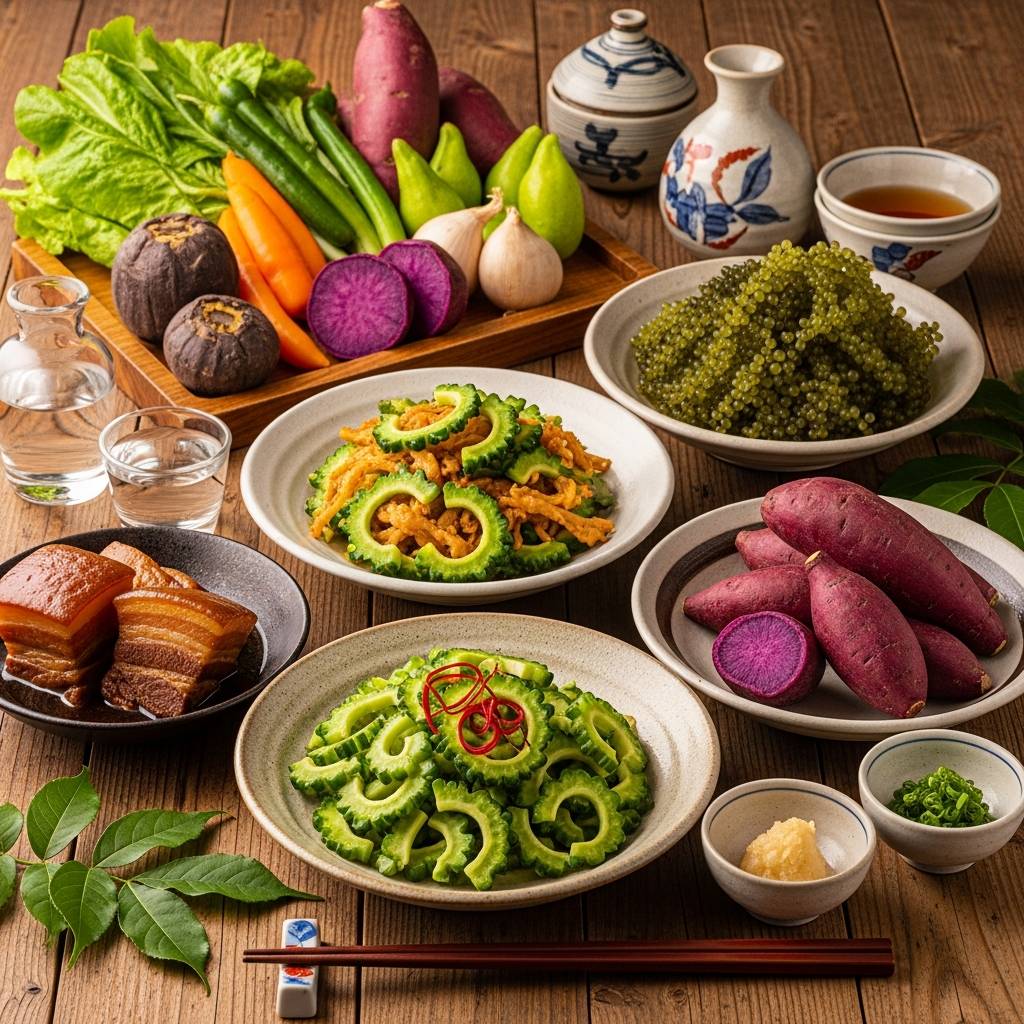
Discover the untold culinary secrets of Okinawa, Japan’s tropical paradise where people live longer than almost anywhere else on earth. While bitter melon (goya) often steals the spotlight, the true magic of Okinawan cuisine lies in its diverse pantry of lesser-known ingredients that have nourished generations of centenarians. From sea vegetables harvested from pristine waters to heritage grains that have sustained islanders for centuries, this treasure trove of nutritional wisdom remains largely unexplored by Western food enthusiasts. In this comprehensive guide, we’ll journey beyond the familiar and introduce you to the authentic flavors that make Okinawan cuisine not just delicious but potentially life-extending. Whether you’re a health-conscious foodie, a culinary adventurer, or simply curious about the eating habits of the world’s longest-living people, prepare to transform your understanding of what truly constitutes “superfood.” Let’s explore the extraordinary ingredients that might just add years to your life while delighting your taste buds.
1. 10 Hidden Gems in Okinawan Cuisine That Will Transform Your Palate
Okinawan cuisine stands apart from mainstream Japanese food with its unique ingredients that contribute to the region’s exceptional longevity. While goya (bitter melon) often steals the spotlight, numerous lesser-known ingredients deserve recognition for their distinctive flavors and health benefits. These hidden culinary treasures have been sustaining Okinawans for generations and are now gaining international attention.
Umibudo (sea grapes), often called “green caviar,” delivers a burst of oceanic flavor with each tiny bubble. This seaweed variety provides a satisfying pop in your mouth while offering abundant minerals and minimal calories. Local restaurants like Yanbaru in Naha serve these delicacies fresh with a simple ponzu dressing.
Shikuwasa, Okinawa’s native citrus, contains more vitamin C than lemons and imparts a uniquely tart flavor to dishes and beverages. From refreshing juices to marinades, this powerful fruit appears throughout Okinawan cooking, particularly at establishments such as Yunangi in Okinawa City.
Rafute, tender pork belly simmered in awamori (Okinawan rice liquor), brown sugar, and soy sauce, represents the islands’ approach to nose-to-tail eating. This melt-in-your-mouth delicacy exemplifies how Okinawans transform humble ingredients into extraordinary cuisine.
Mozuku seaweed, harvested from Okinawa’s pristine waters, contains fucoidan—a compound studied for potential anti-cancer properties. Typically served in a vinegar dressing, this slippery, mild seaweed provides a refreshing palate cleanser between heartier dishes.
Beniimo, Okinawa’s purple sweet potato, features prominently in desserts and side dishes. Its vibrant color indicates high antioxidant levels, while its natural sweetness makes it perfect for treats like the famous beniimo tarts at Okashi Goten.
Mimiga, thinly sliced pig’s ear, might challenge Western diners but offers a delightful crunchy texture when served with ponzu sauce. This protein-rich delicacy demonstrates Okinawans’ resourceful food practices.
Andansuu, a tofu and pork mixture with vegetables, showcases the Okinawan preference for protein combinations. Often seasoned with turmeric, this hearty dish reflects Chinese influences on the island’s cuisine.
Gurukun, the colorful reef fish designated as Okinawa’s prefectural fish, delivers a delicate flavor when grilled with salt or prepared as sashimi. Restaurants like Yuunangi specialize in serving this local delicacy.
Yushi tofu, a softer version of mainland Japanese tofu, absorbs flavors readily and features prominently in Okinawan soups. Its silky texture complements the hearty island broths in dishes like tofu champuru.
Hihatsu pepper, Okinawa’s native alternative to black pepper, provides a distinctive heat that develops slowly rather than immediately overwhelming the palate. Traditional restaurants like Garamanjaku incorporate this subtle spice in their authentic island dishes.
These ingredients form the backbone of Okinawan cuisine—a culinary tradition that balances flavor with nutrition and likely contributes to the famous longevity of the island’s people. Exploring beyond goya reveals a world of tastes unique to this southernmost Japanese prefecture.
2. Okinawan Secret Ingredients: What The Centenarians Eat Daily
The remarkable longevity of Okinawans has fascinated researchers worldwide, and their kitchen staples hold valuable secrets. While bitter melon (goya) often takes the spotlight, several lesser-known ingredients contribute significantly to the Okinawan diet’s health benefits.
Purple sweet potato, locally known as “beni-imo,” stands as a cornerstone ingredient with its vibrant color indicating rich anthocyanin content—powerful antioxidants that combat inflammation and cellular damage. Unlike regular sweet potatoes, the Okinawan variety contains higher concentrations of these beneficial compounds.
Another staple is “mozuku,” a brown seaweed harvested from Okinawan waters. This mineral-rich food contains fucoidan, a compound studied for potential anti-cancer and immune-boosting properties. Okinawans typically consume it in vinegar dressings or soups.
“Shikuwasa,” a citrus fruit native to the region, provides exceptional vitamin C levels—about three times that of lemons. This sour fruit appears in various dishes, dressings, and beverages, contributing to immune system strength and skin health.
Perhaps most surprising is “umi-budo” (sea grapes), a type of seaweed resembling tiny green caviar that bursts with a refreshing sea flavor. Rich in minerals, particularly iodine, these sea grapes support thyroid function and metabolic health.
The Okinawan diet also features “goya champuru,” a stir-fried dish combining bitter melon with tofu, eggs, and vegetables. This protein-rich meal exemplifies the balanced approach to nutrition that characterizes traditional eating patterns in the region.
Notably, Okinawans practice “hara hachi bu”—eating until only 80% full—and consume a wide variety of plant foods. Their traditional diet contains approximately 80% carbohydrates, primarily from vegetables and legumes rather than refined sources.
For those looking to incorporate authentic Okinawan ingredients, specialty Asian markets increasingly stock these items, while online retailers like Amazon and specialty food importers such as Okinawa Superfoods offer convenient access to these longevity-promoting foods.
3. The Forgotten Superfoods of Okinawa: Beyond Goya’s Bitter Magic
While goya (bitter melon) often steals the spotlight in discussions about Okinawan cuisine, the island’s traditional diet features numerous other remarkable ingredients that contribute to the legendary longevity of its people. These forgotten superfoods deserve recognition for their exceptional nutritional profiles and culinary versatility.
Umi-budo, often called “sea grapes” or “green caviar,” is a type of seaweed that resembles tiny clusters of grapes. This oceanic delicacy delivers a burst of briny flavor when eaten and provides abundant minerals, iodine, and omega-3 fatty acids. Traditional Okinawan meals frequently incorporate umi-budo in salads or as a refreshing side dish with ponzu sauce.
Shikuwasa, a citrus fruit native to Okinawa, contains extraordinarily high levels of nobiletin—a flavonoid with powerful anti-inflammatory and anti-cancer properties. Often used as a condiment or in beverages, this small green citrus outperforms lemons in vitamin C content and adds a distinctive tangy flavor to local dishes.
The humble sweet potato, particularly the purple Okinawan variety, has been a dietary staple for centuries. Unlike the common orange sweet potato found elsewhere, the Okinawan purple sweet potato contains anthocyanins—the same antioxidants found in blueberries—along with vitamin A, fiber, and complex carbohydrates that provide sustained energy.
Mozuku seaweed, a brown algae harvested from Okinawan waters, contains fucoidan, a compound studied for its potential anti-cancer and immune-boosting properties. This slippery seaweed is typically served in a vinegar dressing as an appetizer or added to soups for its unique texture and nutritional benefits.
Getto (shell ginger) leaves aren’t consumed directly but are used to wrap and steam foods, imparting a subtle, aromatic flavor while potentially offering antimicrobial benefits. Research suggests compounds in getto may help prevent lifestyle-related diseases and support digestive health.
Turmeric, locally called “ukon,” has been cultivated in Okinawa for centuries. The island’s variety contains particularly high levels of curcumin, renowned for its anti-inflammatory properties. Traditionally used in medicinal teas and cooking, ukon is now recognized globally for its health-promoting qualities.
To truly experience the nutritional wisdom of Okinawan cuisine, explore these lesser-known ingredients alongside the familiar bitter gourd. Each contributes unique phytonutrients to the diet and offers distinctive flavors that have sustained generations of Okinawans. By incorporating these traditional foods into modern meals, we can tap into the same nutritional benefits that have helped make Okinawa famous as a blue zone where people enjoy exceptional longevity and vitality.
沖縄のレンタカー予約は「レンタカー広場」
レンタカー広場で最高の旅の思い出を!
レンタカーの予約はこちらから↓
・沖縄の格安レンタカーが最安値「1,500円~」予約・比較はレンタカー広場がおすすめ
https://rentacar-hiroba.com/