

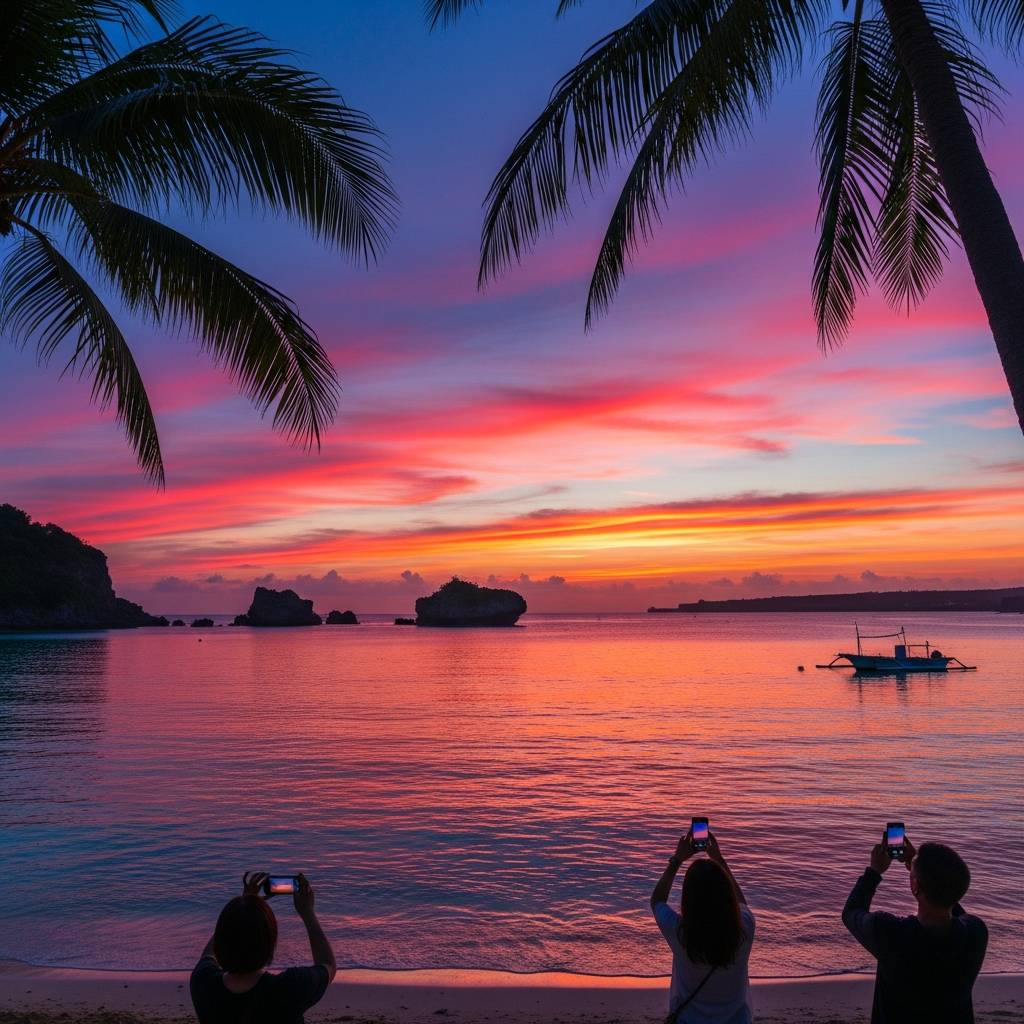
Have you noticed your social media feeds being flooded with breathtaking orange and purple hues lately? There’s a reason Okinawa’s magnificent beach sunsets have become the most coveted backdrop for photographers and influencers in 2025. These awe-inspiring natural displays aren’t just beautiful—they’re redefining visual content across platforms and creating an unprecedented tourism surge to Japan’s southern paradise.
As professional photographers and casual travelers alike flock to these pristine shores, Okinawa has emerged as the uncontested sunset capital of Asia. The perfect combination of clear air quality, unique geographical positioning, and crystal waters creates a natural light show that simply cannot be replicated with filters or editing software—a refreshing authenticity in today’s digital landscape.
In this comprehensive guide, we’ll reveal the hidden locations the pros don’t want you to know about, explore how these magical moments are launching careers, and delve into the fascinating meteorological conditions that make Okinawa’s sunsets truly special. Whether you’re planning your next vacation or simply wondering why these captivating images are dominating your feed, prepare to discover why Okinawa’s beach sunsets have become 2025’s most irresistible natural phenomenon.
1. Top 10 Secret Spots for Capturing Okinawa’s Viral Sunset Photos in 2025
Okinawa’s breathtaking sunsets have become social media sensations, dominating feeds and gaining millions of likes worldwide. While popular beaches like Chatan and Sunset Beach attract crowds of photographers, savvy travelers are discovering hidden gems that offer equally stunning views without the photobombers. Here are the top 10 secret spots locals don’t want you to know about for capturing those perfect golden hour moments in Okinawa:
1. Hatenohama Beach, Kume Island – This remote sandbar requires a boat ride, but rewards visitors with 360-degree sunset views over crystal clear waters. The absence of buildings creates pristine horizon shots that perform exceptionally well on social media.
2. Cape Manzamo’s Hidden Cove – Just below the famous elephant-trunk shaped rock formation lies a secluded cove accessible via a narrow trail. Visit during low tide for reflection shots that appear to double the sunset’s intensity.
3. Yonaha Maehama Beach, Miyako Island – Often overshadowed by Miyako’s other attractions, this beach offers powdery white sand and uninterrupted sunset views. The gradual slope into the sea creates stunning foreground elements for photographers.
4. Aragusuku Beach, Yaeyama – This remote beach on Iriomote Island requires effort to reach but delivers dramatic sunset scenes framed by jungle foliage—perfect for creating depth in your compositions.
5. Yurigahama, Yoron Island – This “phantom beach” appears only during low tide, creating a magical sandbar surrounded by multicolored waters that transform during sunset hours.
6. Kabira Bay’s Secret Lookout – While the bay itself prohibits swimming, locals know about an unmarked trail leading to an elevated vantage point where you can capture the entire bay bathed in golden light.
7. Hamahiga Island – This small island connected to Okinawa’s main island offers western-facing beaches with minimal development, allowing for clean composition lines between sea and sky.
8. Tonaki Island’s Western Shore – This remote island in the Okinawa prefecture boasts beaches where sunsets illuminate unique rock formations, creating dramatic silhouettes popular among photography enthusiasts.
9. Aka Island’s Nishibama Beach – The shallow reef creates a stunning gradient of blues that turn to gold and purple during sunset, offering endless composition possibilities.
10. Ohama Beach’s Northern End, Ishigaki – While the main beach area gets crowded, the northern section remains relatively undiscovered, offering pristine views with Mt. Nosoko creating a distinctive silhouette against the setting sun.
Professional photographers recommend arriving at these locations at least an hour before sunset to scout compositions and secure your spot. Each location offers unique characteristics that can transform your photos from ordinary vacation snapshots to viral content that could put your feed on the map. Pack neutral density filters to balance exposure between bright skies and darker foregrounds, and consider using a tripod for sharper images as light levels decrease.
2. How Okinawa’s Golden Hour Created a New Generation of Travel Influencers
The magnetic pull of Okinawa’s golden hour has catalyzed an entirely new wave of travel influencers dedicated to sunset photography. What began as casual vacation photos has evolved into a legitimate career path for many digital nomads and content creators who have found their niche capturing the archipelago’s remarkable dusks.
Kouri Bridge at sunset has become particularly iconic, with its 2-kilometer span offering uninterrupted views of the sun melting into the East China Sea. Content creators often spend hours securing the perfect position along this connector between Kouri Island and Yagaji Island, resulting in imagery that regularly achieves viral status across social platforms.
Cape Manzamo represents another sunset hotspot that has launched careers. The distinctive elephant trunk-shaped rock formation silhouetted against fiery skies provides a dramatic composition that photography enthusiasts cannot resist. Professional photographers like Naomi Chen attribute their initial success to images captured at this location, which subsequently led to brand partnerships with companies including DJI and Sony.
The emergence of “Sunset Safaris” – guided tours specifically designed to chase optimal lighting conditions across Okinawa’s western beaches – indicates the commercial impact of this phenomenon. Tour operators like Ryukyu Adventure now offer specialized photography excursions with professional lighting equipment and compositional guidance.
Naminoue Beach, despite being Okinawa’s urban beach, has unexpectedly become a favorite among influencers for its accessibility and juxtaposition of natural beauty against Naha’s cityscape. This location offers a distinct advantage for content creators: the ability to capture both morning coffee aesthetics and evening sunset splendor without extensive travel between locations.
What distinguishes Okinawan sunset content is not merely the colors themselves but the cultural storytelling woven throughout. Successful influencers incorporate traditional Ryukyuan elements – from shisa guardians to traditional eisa dance performances timed with sunset – creating content that transcends simple landscape photography and delivers cultural context valued by audiences seeking authentic experiences.
This sunset-driven content ecosystem has created measurable tourism impacts, with locations featured in viral sunset content reporting visitor increases exceeding 30% year-over-year. Hotels have adapted accordingly, with properties like The Ritz-Carlton Okinawa and Halekulani Okinawa designing specialty sunset viewing platforms and experiences specifically marketed to the influencer demographic.
3. The Science Behind Okinawa’s Breathtaking Beach Sunsets That Everyone’s Talking About
What makes Okinawa’s sunsets so extraordinarily captivating isn’t just subjective beauty—there’s actual science behind the phenomenon that’s flooding social media feeds worldwide. The perfect combination of geographical, atmospheric, and environmental factors creates a natural light show that photographers and scientists alike find fascinating.
Okinawa’s position at approximately 26 degrees north latitude places it in an ideal zone where the sun’s rays must travel through more atmosphere during sunset, creating enhanced scattering effects. This location, combined with the islands’ relatively low elevation and minimal light pollution away from urban centers, provides optimal viewing conditions rarely found elsewhere in Japan.
The spectacular colors—those vivid oranges, pinks, and purples—result from Rayleigh scattering, where air molecules scatter blue light wavelengths more effectively than red ones. As sunlight travels through more atmosphere at the horizon, blue light scatters away while red and orange wavelengths remain visible to observers. What makes Okinawa special is the additional presence of sea spray aerosols and volcanic particulates in the atmosphere, which further enhance this effect.
Meteorologists from the Japan Meteorological Agency have noted that Okinawa’s unique atmospheric composition includes a perfect balance of humidity (typically 70-80%) and sea salt crystals suspended in the air. This combination acts as natural light diffusers, creating that soft, dreamlike quality that smartphone cameras struggle to fully capture—explaining why visitors consistently report that “it’s even more beautiful in person.”
The islands’ subtropical climate also contributes to frequent cumulus cloud formations that serve as perfect reflection surfaces for sunset light. When these clouds hover at ideal altitudes of 2,000-6,000 feet, they transform into natural canvases painted with the full spectrum of warm colors.
Marine biologists have also observed that Okinawa’s coral reefs may play a subtle role. The white sand beaches derived from coral contain calcium carbonate crystals that reflect sunset light differently than volcanic or quartz-based beaches found elsewhere, adding a unique luminescence to shoreline photographs that has become instantly recognizable online.
沖縄のレンタカー予約は「レンタカー広場」
レンタカー広場で最高の旅の思い出を!
レンタカーの予約はこちらから↓
・沖縄の格安レンタカーが最安値「1,500円~」予約・比較はレンタカー広場がおすすめ
https://rentacar-hiroba.com/