

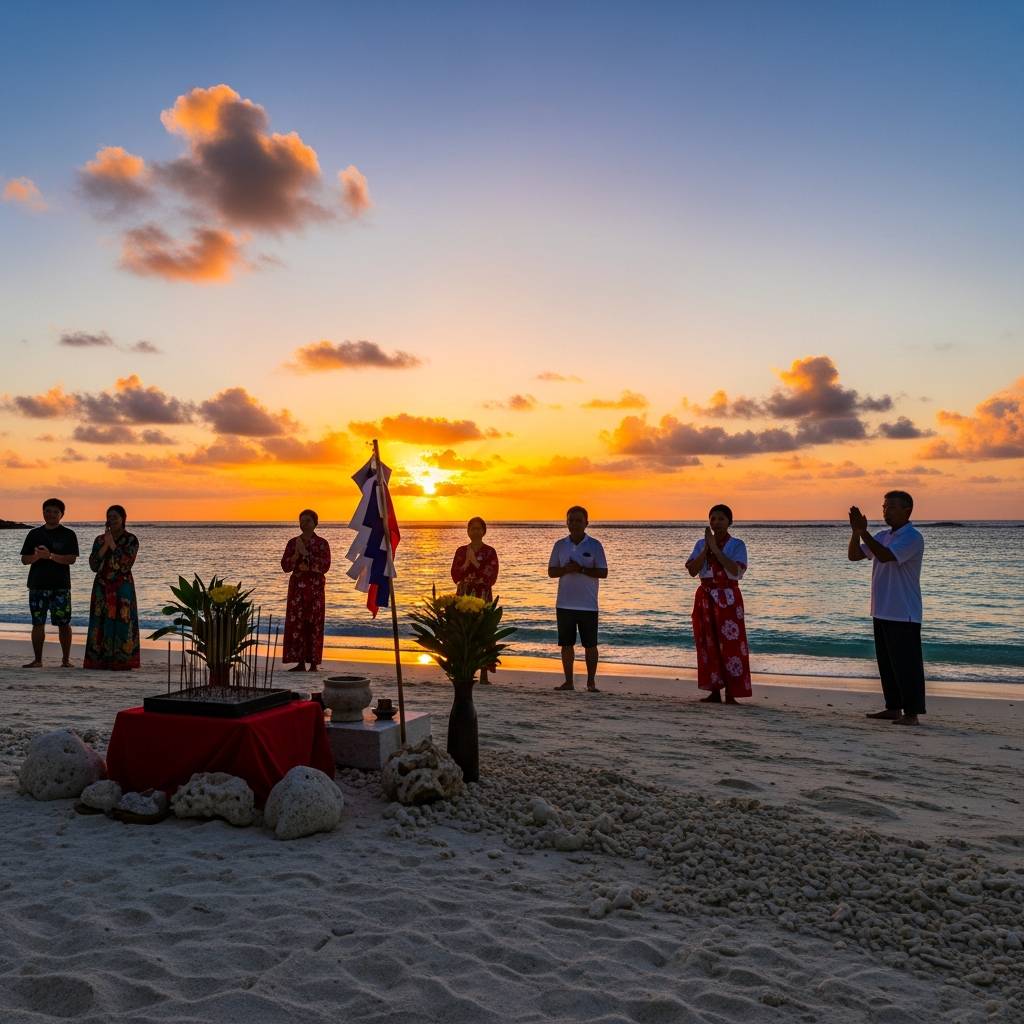
Have you ever experienced the magical transformation that occurs on Okinawan beaches as the sun begins its descent into the East China Sea? Beyond the picture-perfect moments captured for social media lies a deeply spiritual tradition that has been practiced for centuries on these subtropical shores. As the sky erupts in vibrant hues of orange and pink, locals gather to participate in rituals that honor their ancestors and celebrate their unique cultural heritage. These sunset ceremonies aren’t merely tourist attractions—they’re living connections to an ancient past that continues to influence daily life on Japan’s southernmost prefecture. Whether you’re planning your first visit to Okinawa or seeking deeper meaning during your return, understanding these sunset traditions offers a genuine pathway to experiencing the soul of the island. Join me as we explore the sacred dances, healing practices, and authentic ceremonies that make Okinawan beach sunsets not just a visual spectacle but a profound cultural experience that might just transform your perspective on this island paradise.
1. Witnessing the Sacred Dance: How Okinawan Beach Sunset Rituals Honor Ancient Ancestral Spirits
As the golden sun begins its descent over the East China Sea, a remarkable transformation takes place along Okinawa’s pristine shores. Local elders, adorned in traditional white garments, emerge onto beaches like Sunset Beach in Chatan and Manza Beach in Onna Village to perform the “Hinukan” ritual—a sacred dance practiced for centuries on Japan’s southernmost islands. This isn’t merely a cultural performance for tourists; it’s a profound spiritual communion between Okinawans and their ancestral spirits.
The Hinukan ritual represents one of Okinawa’s most authentic connections to its pre-Japanese heritage. During this ceremony, participants move in slow, deliberate patterns across the sand, their feet creating intricate designs believed to serve as pathways for ancestral spirits returning from the sea. These movements, passed down through generations, are accompanied by the haunting melodies of the sanshin—a three-stringed instrument that predates mainland Japan’s shamisen.
What makes these sunset rituals particularly significant is their timing. According to Okinawan spiritual beliefs, the boundary between the physical and spiritual realms becomes permeable during the transition from day to night. Elder practitioners explain that the orange and purple hues that paint the sky create the perfect conditions for communication with ancestors who guide and protect their descendants.
Visitors seeking to witness this profound cultural experience should approach with reverence. Many local communities welcome respectful observers, particularly at Kijoka Beach in the northern region and Azama Sunsan Beach in the south, where the rituals maintain their most traditional elements. Some community leaders even offer pre-ritual explanations in English, providing deeper context about how these ceremonies sustained the Okinawan spirit through centuries of challenge and change.
2. The Golden Hour Healing: Traditional Sunset Practices That Locals Swear Improve Wellbeing
When the sun begins its descent over the East China Sea, Okinawa transforms into a canvas of golden hues. This magical time—known locally as “nichi-utui”—is more than just a picturesque moment; it’s deeply woven into the island’s wellness traditions. Okinawan elders have long practiced sunset rituals believed to harmonize the body and mind, contributing to their famous longevity.
As the golden light bathes Manza Beach or the shores of Zamami Island, local residents can be seen practicing “hinukan,” a meditative breathing exercise performed facing the setting sun. This practice involves seven deep breaths while visualizing the day’s stress dissolving into the ocean. Studies from the University of the Ryukyus have noted correlations between regular sunset meditation and reduced cortisol levels among practitioners.
Another cherished tradition is “sun-gazing,” a carefully timed practice where participants look at the sun only during the final moments before it dips below the horizon. Locals claim this brief connection with the sun’s energy helps regulate sleep cycles and boost vitamin D absorption. While modern science approaches such claims with caution, many visitors report improved sleep after adopting this practice during their stay.
The healing rituals often incorporate “gukku tea”—a local herbal infusion made from island plants harvested at sunset when their healing properties are believed to be most potent. Sipped slowly while watching the sun disappear, this ritual combines phytochemical benefits with mindfulness practices.
Beach yoga sessions specifically designed for sunset hours have become increasingly popular among both locals and visitors. These “nichi-yoka” (sunset yoga) sessions incorporate traditional Okinawan movements with conventional yoga poses, creating a unique practice that honors the island’s cultural heritage while promoting physical wellness.
Perhaps most touching is the community aspect of these sunset rituals. Multi-generational families gather at beaches like Emerald Beach or Kouri Island, sharing stories and wisdom as the day ends. This social connection—a cornerstone of Okinawan culture—is increasingly recognized by health researchers as a vital component of the islanders’ exceptional longevity and mental wellbeing.
For travelers seeking authentic wellness experiences, participating in these sunset rituals offers a genuine glimpse into Okinawan life philosophy. Local guides from Naha’s cultural centers often lead sunset wellness tours, teaching visitors these ancient practices while explaining their cultural significance.
The golden hour in Okinawa isn’t just visually stunning—it’s a daily opportunity to reconnect with ancient wisdom that modern science is only beginning to understand. As one elder from Ogimi village explains, “The sunset reminds us that endings are beautiful and necessary, making space for new beginnings.” This cyclical view of wellness continues to influence Okinawan health practices today.
3. Beyond Tourism: Participating in Authentic Sunset Ceremonies That Connect You to Okinawa’s Soul
While postcard images of Okinawa’s sunsets are breathtaking, experiencing the island’s authentic sunset ceremonies offers a profound connection that transcends typical tourism. These sacred moments, when day transitions to night, have held spiritual significance for Okinawans for centuries.
The “Niraikanai” ritual, practiced in coastal communities like Yomitan and Onna, welcomes ancestral spirits believed to arrive from the sea. Visitors can respectfully join locals as they place small offerings of awamori (Okinawan rice liquor), fruits, and flowers at the shoreline while chanting traditional prayers. The Nirai Kanai Cultural Center in Yomitan occasionally hosts these ceremonies with English interpretation for visitors seeking deeper understanding.
In Kudaka Island, known as “the island of the gods,” the “Izaiho” ritual occurs during specific sunset hours where female priestesses perform ancient songs and dances. While some portions remain private for islanders, many communities now welcome respectful observers to designated areas. Advance arrangements through cultural preservation groups like the Okinawa Traditional Culture Association provide proper access and context.
The “Umikaji” fire ceremony on Zamami Island involves lighting torches at sunset, symbolizing purification and renewal. Participants form a circle, passing flames from person to person while sharing hopes and intentions. The Zamami Village Tourism Association facilitates visitor participation during monthly ceremonies, creating memorable cultural immersion opportunities.
For those seeking hands-on experiences, the sunset “Eisa” drum workshops at Naminoue Beach in Naha teach traditional rhythms played during twilight hours. These community-led sessions often culminate in impromptu performances as the sun disappears beyond the horizon.
Remember that participation requires cultural sensitivity and proper respect. Dress modestly, avoid excessive photography during sacred moments, and always seek permission before joining. The true value comes not from social media documentation but from the authentic connection formed through shared reverence for Okinawa’s spiritual traditions as day transitions to night.
沖縄のレンタカー予約は「レンタカー広場」
レンタカー広場で最高の旅の思い出を!
レンタカーの予約はこちらから↓
・沖縄の格安レンタカーが最安値「1,500円~」予約・比較はレンタカー広場がおすすめ
https://rentacar-hiroba.com/