

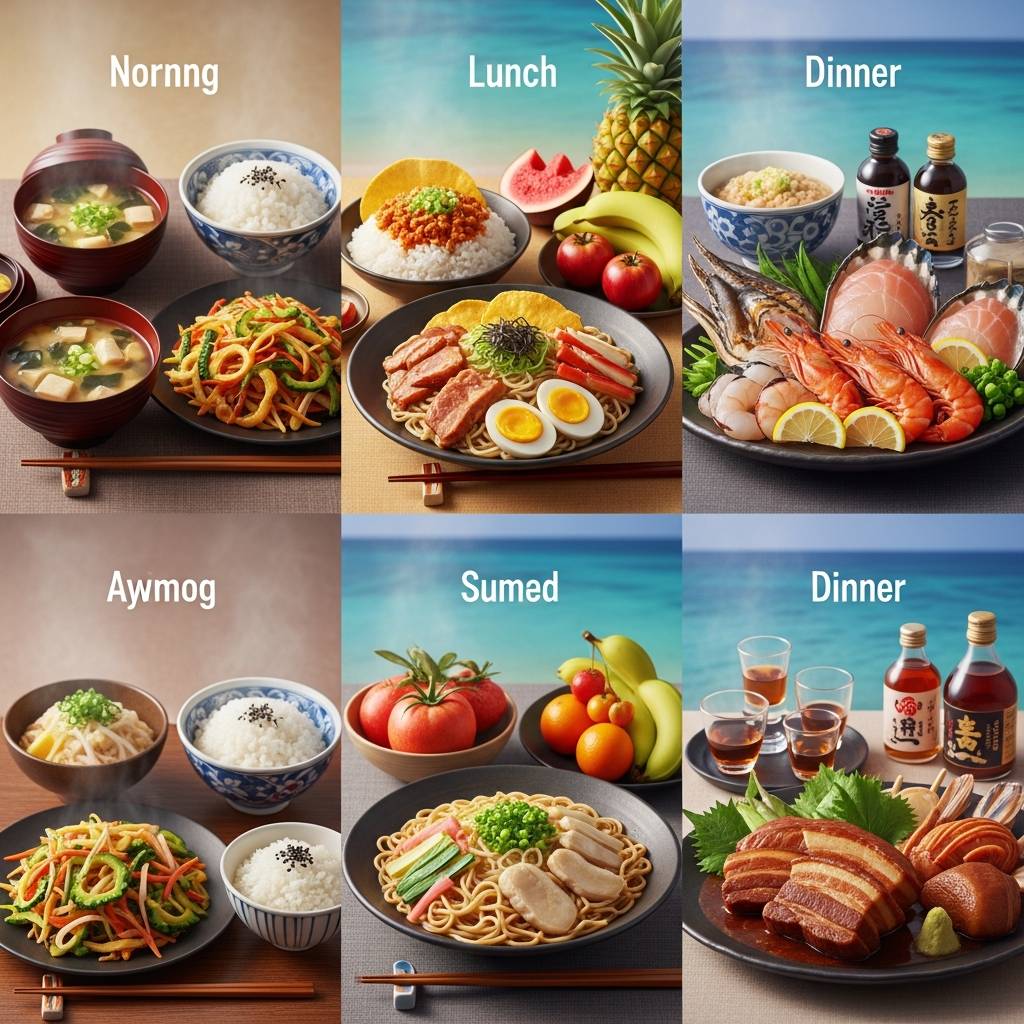
Are you planning your culinary adventure through the tropical paradise of Okinawa? Look no further! As a seasoned traveler who has explored every corner of this beautiful Japanese island, I’m thrilled to share my ultimate food guide that will take you from sunrise to sunset through the most delicious meals Okinawa has to offer. Unlike the mainstream tourist recommendations, this guide reveals authentic eating experiences that showcase why Okinawan cuisine is considered one of the world’s healthiest food cultures – contributing to the famous longevity of locals. From traditional morning dishes bursting with nutritious ingredients to hidden lunch spots frequented by locals, and culminating with unforgettable seaside dinners under the stars, this comprehensive itinerary promises to transform your Okinawa visit into a remarkable gastronomic journey. Whether you’re a dedicated foodie seeking authentic flavors or simply want to experience the true essence of Okinawan culture through its food, this guide will reveal exactly where and what to eat for the perfect day in Japan’s tropical paradise.
1. Sunrise Delights: The Ultimate Okinawan Breakfast Experience You Can’t Miss
Dawn breaks over Okinawa, and while most tourists are still dreaming, locals are already lining up for the island’s most authentic breakfast experiences. Okinawan breakfast is a culinary revelation that combines Japanese traditions with unique island influences, creating morning meals unlike anywhere else in Japan.
Start your day at Yama-no Chaya in Naha, where their traditional Okinawan breakfast set features the cornerstone of island nutrition: shima-dofu. This firmer, protein-rich tofu is served alongside goya champuru (bitter melon stir-fry) and umibudo (sea grapes) that deliver a briny pop with each bite. The small cup of awamori (Okinawan rice spirit) some establishments offer isn’t just tradition—it’s considered a health tonic by elderly Okinawans who regularly live past 100.
For those seeking something heartier, Pork Tamago Onigiri in Onna Village serves their namesake creation—rice balls filled with spam or rafute (Okinawan braised pork belly) and wrapped in egg. These portable morning delights often sell out by mid-morning, testament to their popularity among locals and visitors alike.
The true breakfast connoisseur should not miss Juri-Juri in Nago, where their signature Okinawa soba arrives with a perfectly poached egg atop thick wheat noodles swimming in a rich pork broth. Unlike mainland Japanese soba, Okinawa’s version uses wheat rather than buckwheat, resulting in a heartier noodle that stands up to the robust broth.
What distinguishes an Okinawan breakfast is the presence of local vegetables like handama (Okinawan spinach) and kandaba (sweet potato leaves), alongside fermented specialties that reflect the island’s preservation traditions. Many traditional breakfast spots serve Sanpin-cha, a jasmine-infused green tea that locals claim aids digestion and boosts longevity.
For an unforgettable morning view with your meal, Cafe Curcuma in Onna sits perched on a cliff overlooking the East China Sea, where their signature breakfast plate features locally-caught fish grilled simply with salt alongside traditional Okinawan sides. The cafe’s house-made jimami (peanut) tofu offers a sweet protein alternative that’s uniquely Okinawan.
These sunrise delights represent more than just breakfast—they’re a window into Okinawa’s centenarian culture, where food is medicine and every meal begins with “Kusuimun” (meaning “medicine”) to acknowledge the healing power of what you’re about to enjoy.
2. Secret Local Spots: Where Okinawans Enjoy Their Authentic Lunch
Beyond the tourist-filled restaurants lies a hidden culinary world where locals savor authentic Okinawan lunch specialties. These treasured spots, often tucked away in narrow alleyways or nestled in residential neighborhoods, offer the true essence of Okinawan cuisine at its finest.
In Naha’s Makishi area, just a few blocks from the famous Kokusai Street, you’ll find Yushi Tofu, a tiny establishment where the same family has been crafting handmade tofu for three generations. Their signature dish, “yushi-dofu,” features silky fresh tofu served in a warm, umami-rich broth garnished with bonito flakes, green onions, and ginger. The locals arrive early, as they often sell out by early afternoon.
For those seeking the perfect Okinawan soba experience, head to Kishimoto Shokudo in Motobu. This unassuming restaurant has no English menu, but pointing and smiling will reward you with bowls of hearty soba noodles swimming in a rich pork bone broth, topped with slow-cooked rafute (pork belly) that melts in your mouth. The elderly couple running this establishment prepares everything from scratch each morning.
In Uruma City, local office workers queue up daily at Emi no Mise, famous for its goya champuru (bitter melon stir-fry). What sets this place apart is their use of island-raised pork and vegetables harvested that morning from nearby farms. Their lunch set includes a main dish, miso soup with local seaweed, and three island-style side dishes that rotate seasonally.
For those exploring the northern part of the island, Yambaru Shokudo in Nago offers chanpuru dishes featuring rare mountain vegetables foraged from the Yambaru forest. Their specialty lunch plate combines these indigenous ingredients with locally caught fish, creating flavors unique to this region of Okinawa.
Perhaps the most cherished local secret is Hamasaki in Itoman, where fishermen gather after returning with their morning catch. This bare-bones eatery serves the freshest sashimi imaginable, often prepared from fish that were swimming just hours earlier. Their taco rice—an Okinawan specialty that blends American and local influences—features locally-raised ground beef seasoned with island spices.
What makes these establishments special isn’t just their food—it’s the atmosphere of community. You’ll witness multiple generations sharing meals, neighbors exchanging news, and proprietors who remember regular customers’ preferences. These are spaces where Okinawa’s food culture is preserved and celebrated daily, far from the commercial establishments catering to tourists.
Visit during off-peak hours (11:00 am or after 1:30 pm) to avoid the local rush and increase your chances of finding seating at these small establishments. While some proprietors speak limited English, a respectful attitude and appreciation for their craft will transcend any language barriers, offering you an authentic taste of Okinawan daily life through its most beloved lunch traditions.
3. Seaside Dinner Magic: End Your Perfect Okinawa Day With These Traditional Flavors
As the sun begins its descent over the East China Sea, Okinawa transforms into a magical dining destination where traditional flavors come alive against breathtaking coastal backdrops. Dinner in Okinawa isn’t just a meal—it’s the culmination of a perfect day exploring Japan’s tropical paradise.
For an authentic Okinawan dinner experience, seek out restaurants serving Agu pork, a prized local ingredient with a rich, distinctive flavor unlike any other pork variety in Japan. The slow-cooked rafute (braised pork belly) at Yunangi in Naha perfectly showcases this delicacy, simmered in awamori (Okinawan rice liquor) until meltingly tender.
Seafood enthusiasts should head to Umikaji Terrace in Senaga Island, where restaurants like Fish Market Senaga offer the day’s freshest catch prepared with minimal intervention to highlight natural flavors. The grilled gurukun (Okinawan reef fish) is particularly noteworthy—this official prefectural fish delivers a delicate taste that perfectly embodies Okinawan coastal cuisine.
No Okinawan dinner would be complete without sampling island vegetables. Goya champuru—a stir-fry featuring bitter melon, tofu, eggs, and spam—represents the unique fusion of Japanese, American, and indigenous influences that define Okinawan cooking. Family-run Yayoi in Nago city serves a version that balances the vegetable’s bitterness with perfect precision.
For a truly memorable dining experience, book a table at Restaurant Hiramatsu Okinawa. Perched on coastal cliffs in Onna Village, this fine dining establishment artfully blends French techniques with Okinawan ingredients while offering panoramic ocean views through floor-to-ceiling windows.
Complete your culinary journey with Okinawa’s unique desserts. Sata andagi (Okinawan doughnuts) provide a sweet, satisfying conclusion to your day of eating, especially when paired with sanpin tea—Okinawa’s jasmine-infused specialty that aids digestion after a hearty meal.
The perfect Okinawan dinner captures the essence of this island prefecture—a harmonious balance of simplicity, abundant natural ingredients, and culinary techniques refined over generations. As you dine with the sound of waves in the background, you’ll understand why Okinawan cuisine forms a central pillar of the famous longevity enjoyed by local residents.
沖縄のレンタカー予約は「レンタカー広場」
レンタカー広場で最高の旅の思い出を!
レンタカーの予約はこちらから↓
・沖縄の格安レンタカーが最安値「1,500円~」予約・比較はレンタカー広場がおすすめ
https://rentacar-hiroba.com/