

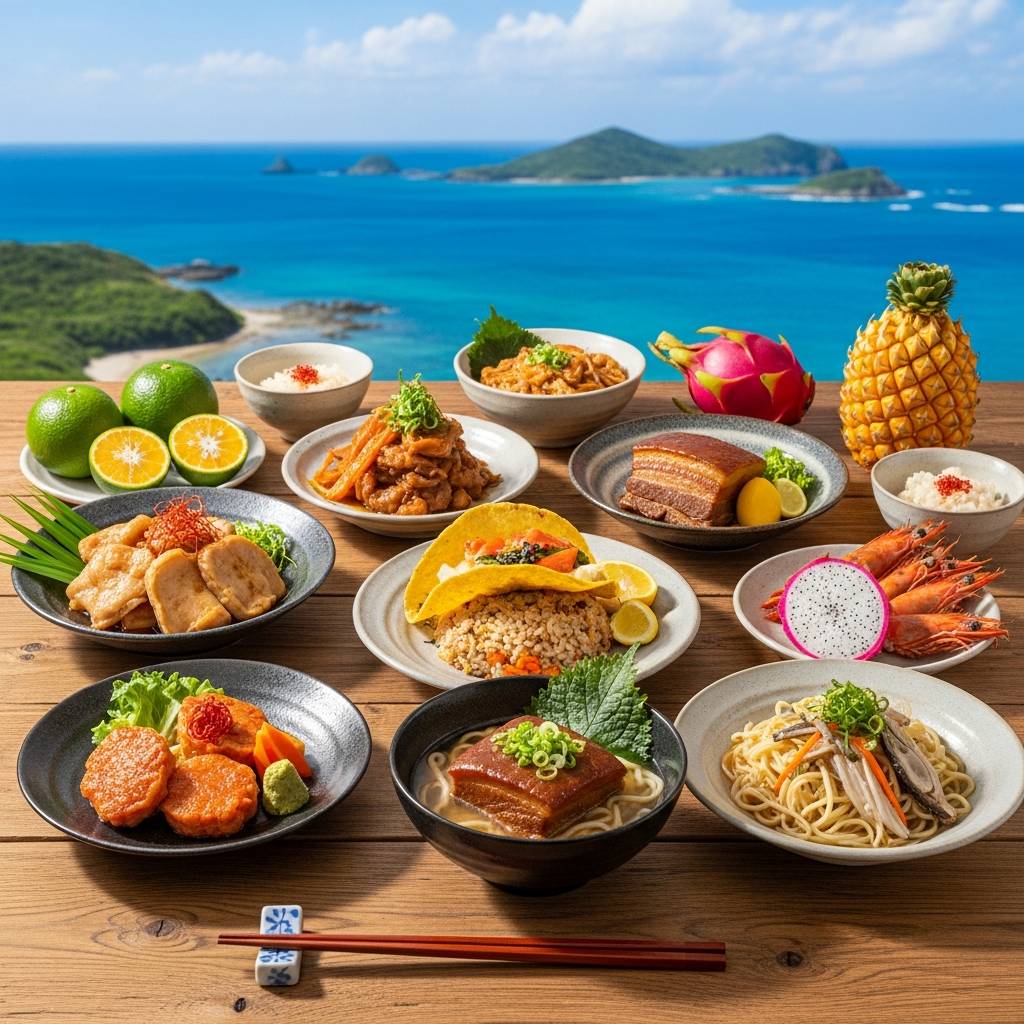
Are you ready to embark on a culinary adventure like no other? Welcome to Okinawa, Japan’s tropical paradise, where the food is as vibrant and diverse as the crystal-clear waters surrounding these magical islands. As a destination increasingly recognized by global food enthusiasts, Okinawa offers a unique gastronomic experience that stands apart from mainland Japanese cuisine—influenced by centuries of international trade, a subtropical climate, and a culture that celebrates longevity through food.
In this comprehensive guide, we’ll take you beyond the tourist traps to discover authentic flavors that have shaped Okinawan identity for generations. From umami-rich seafood harvested hours before reaching your plate to heritage recipes preserved by local families for centuries, this food itinerary promises to transform not just your understanding of Japanese cuisine, but your entire approach to mindful, joy-filled eating.
Whether you’re planning your first visit to these enchanting islands or seeking to deepen your appreciation of Okinawa’s culinary traditions, this island-hopping food adventure will reveal why Okinawan cuisine deserves a prominent place on every food lover’s bucket list. Pack your appetite and join us as we explore the tastes that have helped Okinawans become some of the longest-living people on earth!
1. 10 Okinawa Delicacies That Will Transform Your Japanese Food Bucket List
Okinawan cuisine stands apart from mainland Japanese food with its distinct flavors, unique ingredients, and fascinating culinary history influenced by centuries of trade with China, Southeast Asia, and beyond. While Tokyo and Osaka might dominate Japan’s food conversations, Okinawa offers taste experiences you simply can’t find anywhere else. These ten Okinawan delicacies deserve prime placement on your culinary bucket list when visiting Japan’s tropical southern islands.
First on any Okinawan food journey should be Goya Champuru, the prefecture’s signature stir-fry dish combining bitter melon with tofu, eggs, and typically spam or pork. The bitter notes of the goya are perfectly balanced by the savory proteins, creating a nutritious dish that locals credit for their legendary longevity.
Equally essential is Okinawa Soba, which despite its name, uses wheat noodles rather than the buckwheat found in mainland soba. Served in a rich pork broth with tender rafute (braised pork belly), fish cake, and green onions, this hearty bowl provides comfort in any season.
For seafood lovers, Mozuku is an unmissable experience – a delicate seaweed variety often served in a vinegar dressing that showcases Okinawa’s pristine waters. Meanwhile, Umibudo (sea grapes) deliver a burst of oceanic flavor with their caviar-like texture, earning them the nickname “green caviar” among international chefs.
Rafute deserves its own spotlight – thick cuts of pork belly slow-simmered in awamori (Okinawan rice spirit), brown sugar, and soy sauce until meltingly tender. This caramelized, umami-rich dish perfectly represents the islands’ approach to pork, where “every part of the pig is used except the squeal.”
Taco rice demonstrates Okinawa’s American influence – a fusion dish combining taco-seasoned ground beef atop Japanese rice, topped with cheese, lettuce, and tomato. Created near US military bases, it’s now beloved throughout Japan.
Sweet potato enthusiasts must try Beni-imo treats – from vibrant purple tarts to ice cream featuring Okinawa’s signature purple sweet potato variety. The natural sweetness and striking color make these desserts as Instagram-worthy as they are delicious.
Sata andagi, Okinawan doughnuts with a dense, cake-like texture and crispy exterior, provide the perfect handheld snack while exploring island markets. Their slightly sweet flavor pairs perfectly with the local sanpin (jasmine) tea.
For the adventurous, Mimiga offers thinly sliced pig’s ear dressed with vinegar and garnishes – a textural experience with the perfect amount of crunch and chew that pairs exceptionally well with Okinawa’s craft beers and awamori.
Finally, no Okinawan culinary journey is complete without sampling the prefecture’s famous awamori – a distilled rice spirit that predates Japan’s better-known sake. Aged varieties develop remarkable complexity, with some premium bottles aged for decades in traditional clay pots.
These ten delicacies merely scratch the surface of Okinawa’s rich food culture. Each dish tells stories of the islands’ complex history, geographical isolation, and cultural exchanges while offering flavors you’ll remember long after your tan fades.
2. Eat Like a Local: Hidden Okinawan Food Gems That Tourists Miss
While tourists flock to the well-known restaurants in Naha’s Kokusai Street, the true essence of Okinawan cuisine lies in the modest establishments frequented by locals. These hidden gems preserve authentic flavors that have been passed down through generations.
In the backstreets of Naha, you’ll find Yuntaku-ya, a tiny izakaya where fishermen gather after work. Their goya champuru (bitter melon stir-fry) uses a family recipe that balances bitterness with the richness of local eggs and island-raised pork. Unlike tourist versions, their dish includes handpicked herbs that elevate the classic to new heights.
Travel north to Motobu Peninsula where Emi no Mise serves what locals consider the definitive rafute (braised pork belly). The owner, who learned cooking from her grandmother, simmers the pork for over six hours in kokuto (Okinawan brown sugar) and awamori. The result is a melt-in-your-mouth experience that puts commercial versions to shame.
For seafood aficionados, the small fishing village of Henoko harbors Uminchu Shokudo, where the day’s catch becomes the evening’s feast. Their ikasumi jiru (squid ink soup) represents Okinawan soul food at its purest—something rarely found on tourist menus but beloved throughout the islands.
On Ishigaki Island, seek out Yaeyama Soba at Obā no Mise (Grandma’s Place). Unlike the common Okinawa soba, this regional variety features flat noodles and unique island-grown ingredients. The broth, simmered with local shellfish and island herbs, carries flavors that have remained unchanged for centuries.
For those exploring the remote Yanbaru forest region, Kunigami no Ie serves the island’s most authentic jūshī (Okinawan mixed rice). Their version incorporates seasonal mountain vegetables foraged that morning, creating a dish that connects diners to Okinawa’s natural bounty.
Perhaps the most overlooked treasure is Makishi Public Market’s second floor, where local fishermen’s wives operate small eateries. Choose seafood from downstairs vendors and have it prepared according to recipes that have sustained island communities for generations—an experience worlds apart from the sanitized versions presented in guidebooks.
These establishments don’t cater to tourist expectations. They serve what Okinawans actually eat, preserving culinary traditions that tell the true story of these islands. By seeking these places out, you’ll not only taste authentic Okinawan cuisine but also connect with the cultural heart of Japan’s tropical paradise.
3. From Sea to Table: The Complete Guide to Authentic Okinawan Cuisine
Okinawan cuisine stands as a culinary treasure reflecting the archipelago’s unique history, geography, and cultural influences. Unlike mainland Japanese food, Okinawan dishes incorporate Chinese, Southeast Asian, and American elements—creating a gastronomic experience unlike anywhere else in Japan.
The foundation of authentic Okinawan cuisine begins with its celebrated ingredients. Goya (bitter melon), mozuku seaweed, umibudo (sea grapes), and shikuwasa citrus form the backbone of local dishes. The tropical climate and surrounding ocean provide an abundance of fresh produce and seafood that define the region’s food identity.
Pork holds sacred status in Okinawan cooking—locals famously use “every part of the pig except the squeal.” Signature dishes include rafute (stewed pork belly), tebichi (braised pig’s feet), and mimiga (thinly sliced pig’s ear). This nose-to-tail approach predates modern sustainability movements and reflects generations of resourcefulness.
Seafood naturally dominates coastal menus. At Makishi Public Market in Naha, visitors can purchase fresh catches and have them prepared at second-floor restaurants. For the most authentic experience, seek out smaller establishments in fishing communities like Itoman or Motobu, where the day’s catch transforms into sashimi, nimono (simmered dishes), and irabu-jiru (sea snake soup)—a local delicacy said to promote longevity.
Traditional cooking techniques separate Okinawan cuisine from its Japanese counterparts. Lower temperature, longer cooking times preserve nutrients and develop complex flavors. The celebrated chanpuru dishes—stir-fried medleys typically featuring goya, tofu, egg, and protein—showcase this approach perfectly. Goya chanpuru represents Okinawan cooking at its most iconic.
No guide to Okinawan cuisine would be complete without mentioning awamori—the indigenous spirit distilled from long-grain rice. Unlike mainland sake, awamori undergoes a single distillation process, resulting in a higher alcohol content and distinctive flavor. Visit Zuisen Distillery or Kamimura Shuzo to learn about traditional production methods and sample aged varieties.
For those seeking culinary immersion, cooking classes at Taste of Okinawa or Yonner Food offer hands-on experiences making traditional dishes under expert guidance. These workshops typically include market tours to source ingredients, providing deeper understanding of local food culture.
The true magic of Okinawan cuisine lies in its connection to the islands’ famous longevity. The traditional diet—rich in vegetables, moderate protein, minimal processed foods—mirrors modern nutritional recommendations. Visiting vegetable-forward restaurants like Ukishima Garden in Ginowan showcases how these principles translate to contemporary dining.
While exploring Okinawan cuisine, remember that authentic experiences often hide in plain sight. Look for restaurants filled with locals, menu items written only in Japanese, and establishments serving traditional accompaniments like jimami tofu (peanut tofu) and traditional pickles. These subtle indicators often signal the most rewarding culinary experiences in Okinawa.
沖縄のレンタカー予約は「レンタカー広場」
レンタカー広場で最高の旅の思い出を!
レンタカーの予約はこちらから↓
・沖縄の格安レンタカーが最安値「1,500円~」予約・比較はレンタカー広場がおすすめ
https://rentacar-hiroba.com/